Wednesday, September 2, 2009

BN's Bullshit On MAS Revealed

Comments by Sarawak Headhunter in red.

Friday, August 07, 2009

Idris Jala bullshit results, 2nd Qtr operating loss worsens

MAS announced it's second quarter results today. Net profit was RM876 million and offset the first quarter loss of RM695 million for a first half profit of RM181 million.

That announcement managed to brush aside analysts' expectation of further loss. Why bother about these life is a straight line forecast and everything remain the same like before analysts?

With the new accounting scheme of mark-to-market for any outstanding futures hedging, the real number that needs highlighting was intentionally hidden. Read on to know the stories shrouding their fuel hedging debacle.

The financial presses were really being 'bodoh'. None bothered to ask about the operating profit and loss. In the first quarter, MAS posted an operating loss of RM138 million. What was the second quarter like?

Read the Bernama report first below:

MAS Posts Net Profit RM876 Mil In Q2

KUALA LUMPUR, Aug 6 (Bernama) — Malaysia Airlines (MAS) posted net profit RM876 million in the second quarter ended June 30, 2009, the highest ever quarterly net profit recorded by the airline.

This profit offsets the national carrier’s RM695 million net losses in the first quarter, leading to a first-half net profit of RM181 million.

Due to the oil price recovery since March 31, 2009, MAS’ fuel hedging losses of RM640 million in the first quarter has been reversed with a RM1.3 billion gain in the second quarter, the airline said in a statement.

Since the beginning of the year, the airline has implemented aggressive sales campaigns to deal with the worst crisis facing the industry.

It successfully increased its load factor to 66 per cent in the second quarter, a double digit growth of 10 per cent compared to 56 per cent in the first quarter.

In response to the growing demand, with the domestic load factor up by 69 per cent in the second quarter, it said the national carrier had increased the capacity by six per cent by adding more aircraft for the domestic sector.

The airline also made substantial load factor gain for its international routes with loads up 11 per cent to 65 per cent compared to 56 per cent in the first quarter.

“We are managing well in this crisis. While the operating environment remains tough, the load factors have increased due to our aggressive strategies to boost sales.

“On the domestic front, more passengers are travelling with us,” managing director/chief executive officer Datuk Seri Idris Jala said.

“On international routes, we have performed better than the industry average as we are less dependent on the front end,” he said, adding that the airline forecast booking numbers for the second half of the year are encouraging.
All that bullshit about rising load factor and yet no mention of operating P&L.

So this super Orang Ulu Idris Jala is revealed as being just another bullshitter. The reward: make him a Federal Minister so that he can teach Najib and the rest of the Cabinet how to bullshit properly.

In the first place, load factor is the old variable to manage an airline. Pushing for purely load factor was the one that got former Managing Director Dato Fuad the boot for taking MAS into loss territory immediately after the financial restructuring. The fancifully named sell and leaseback scheme made Azman Mokhtar's Binafikir famous.

The important variable today is revenue per seat.

Before announcing MAS's operating loss, this is what was heard of MAS' fuel hedging scheme. They left it to the total discretion of Investment Banker Morgan Stanley Singapore. Upon realising the mess Morgan had made, they were considering of hiring an oil futures trader, which they should have done in the first place, but he declined. The whole market has been talking about their messed up oil hedge position.

It is unheard of to totally out-source one's financial market hedging to others who are without knowledge of the whole company's financial variables and constraints. Off course, this is market talk. It is usually more rumour than the truth. But beware that market talk moves markets.

The absurd part of this is the much confidence given to Dato Seri Idris Jala to weather the storm from the oil crisis. That was the story sold to have him extend his stay at MAS. MAS also had highly paid accountants like foreign-trained Tengku Azmil and the many spectacled young Ah Piows from Ernst & Young.

The truth is the Butcher from Shell was never an oilman. He must have butchered all those with experience in fuel hedging within the Treasury team built from the days of Encik Shahril and Low Chee Ting. Now this is the time to repeat my incessant and repeated complaint of young inexperienced know nuts brought into MAS to replace those experienced and appropriately described as knowledge workers.

Idris Jala it seems is nothing more than an oilyman.

The mistake by Tun Lah to entertain the recommendation of Idris Jala by Kamaluddin's friend is also the second quarter operating loss of RM421 million. And that is a further deterioration from RM138 million in first quarter.

So what the f**k is this talk of rising load factor? Don't bullshit about net profit. If your operation doesn't make money, how are you to keep the Company afloat?

Oh yes, the 2nd quarter operating figure is also rumour. So don't sue.

Sunday, August 09, 2009

Why Idris Jala did not reveal and financial press not ask about MAS' operating loss?


Looks like Sarawak has its own highly-paid Pinnocchio trying very hard to fly high but falling flat instead. Do the orang Malaya really believe all his crap? Very sure they know what is really going on.

It is impossible for the financial press to not ask about MAS' operating profit. Unless MAS has transformed the company's core business into jet fuel arbitrage, the operating P&L remains relevant. Hmm ... MAS a jet fuel arbitrage company, that's a niche business idea.

It is from the operating profit that cashflow is generated to maintain the company as an ongoing concern and eventually turn around MAS. Operating profit will translate into the net profit, which God willing could be used to reduce any accumulated losses. Without operating profit, MAS will continually be sucking money from the Treasury.

P Gunasegaran wrote here on similar issue raised in the previous posting. However, he did not pick up where we left off. Kalimullah's contemporary should ask why Idris withheld the information and the financial press including The Star did not ask?

It is simple. In fact, Idris used the same generic corporate trick before. By withholding the operating loss, the financial press will highlight on "capital gain" from hedging revaluation. Still, why did he do it?

Idris Jala reminded me of Tan Sri Nor Mohamad Yakcop's past statement to praise him as the best CEO money can buy. See the newspaper clipping below:


Wonder what made Nor Mohammad impressed by the so-called turnaround done by the Butcher from Shell?

Obviously Idris has been bought and paid for by the ruling BN regime and must now justify his position and use to them.

The Butcher merely reduced overhead by retrenching experienced Airliners but later hired young cikus with zero Airline experience, placed them in numbers at various levels of management, and paid them much higher scale than the senior retrenched staff.

The Butcher retrenched the experienced ones so that they are no more a pain in his ass to nag him of his amateurish manner in running a full service Airline. He brought in lots of Ah Piow accountants from Ernst and Young who got no shindick knowledge of Airlines.

If there are consultants like Booz Allen Hamilton, McKinsey & Co. and Ethos Consulting, then you know Khairy and Tingkat 4 have their hand in it. For sure, Khairy and Zaki Zahid had a direct hand to change the National Aviation policy in favour of Airasia. Part of the money went to MyTeam.

Idris did the predictable reorganising of routes. He intended to cut the not profitable routes but Khairy and the corrupt MCA Transport Ministers forced them to give some profitable routes to Airasia. The routes cut the company's capacity, which means limiting capacity to generate profit potential for the future.

Is it a surprise MoF II could claim Idris as the best CEO money could buy?

All along, MAS was not performing well operationally. Thus the second phase of the turnaround plan is to show MAS generating operating profits. That way he could get an extension on his contract.

For that he sold MAS buildings and assets locally and abroad. With the smart and manipulative accounting mind of Tengku Azmil, the capital gain appears on the operating profit column.

That's the past. It's too time consuming to display what happened with facts and figures. Coming to the question again, why did he unethically manipulate the results announcement?

See the headline by The Malaysian Insider with its link below:


The link here.

Doesn't that explain everything? With the aviation industry at a loss, doesn't Idris Jala look impressive for being able to outperform the industry?

MAS Adviser is in slumberland to notice such small but relevent technicality. He is likely to say MAS did well when others are losing. His circle of people are still operating. Kalimullah, crony to sleepy and Nor Mohamad Yakcop assisted MAS with this lie with the hope to make sleepy look good. See the headline given by The Malaysia Insider.

The full report can be read at the link here.

This is a clear cut con job by Idris Jala, Tengku Azmil and Kalimullah. If there is nothing coming from the authorities, then Tan Sri Nor and Tan Sri Azman Mokhtar are together in this lie. Khazanah has yet to turnaround MAS, Proton and Renong/UEM Group since they were first assigned to turnaround GLCs.

KPI?

P/S MAS used this blog for it's internal Leadership High Development course to show the natural occurrence of rejection towards new management. Hope they continue to do so and be sure to distribute this and previous postings. They need to prepare for another rejection because these postings will be sent to high places.

Friday, 28 August 2009

From Sakmongkol AK47

Responding to Anwar’s Ngajat?


Anwar's Ngajat?

Neutralising Anwar Ibrahim's Ngajat overtures! That's the only rationale I see behind Idris Jala's appointment.

In 1975 when I was in 6th form at SABS Kuantan, my Economics teacher, Mr Tan Kee Chow, gave us one of the most practical adages. If you borrow RM500,000 you are at the mercy of the bank. But if you borrow RM500 million, the bank is at your mercy. It couldn't be truer these days. Present day translation: - If you want to make a mistake, make a gigantic and noisy one. You will get promoted to minister.

What KPI will Idris Jala be implementing? His record at MAS is a very much overhyped one. Losses are masqueraded behind balance sheet cleansing. MAS' assets are sold for a song. MAS will be having no assets at all. But he has been regarded as the best CEO money can buy. Who does this assessment? The vadey eating Nor Yaakob. Isn't he the one the last time who paralysed Bank Negara with gargantuan losses in the currency market? He made it to finance minister and now heads the EPU. He is now the stumbling block to the proposal by a group to take over road toll concessionaires. Helo mister, that's RM50 billion into the government's coffers. Wang masuk lah, bukan wang keluar.

That's also the 2nd Great Highway Robbery about to commence, and Mohd Nor probably just wants to make sure he gets his hands on his share of the proceeds. RM50 billion into the government's coffers from where? From the rakyat for them to waste some more?

The only rationale I see with Jala's appointment is Sarawak politics. He is a Dayak - Pak Lah thought he was a Muslim and so he got his chance of becoming MAS CEO. In Sarawak, the survival of BN hinges upon Dayak support who form the majority group. After years of neglect and sidelined, Idris Jala's appointment is perhaps a big consolation to soothe things out. It is hoped by this appointment, Dayak support to the BN will be secured. I hear Anwar Ibrahim is already learning to do the ngajat dance.

But it can also be seen as an excuse to kick out this Dayak from slashing and burning MAS further.

The government's KPI now is winning the trust of the people immediately. Its KPI is key groups targeting. Its KPI is bringing immediate benefits to the lumpenproletariat who don't give a hoot about the 30% quota requirements, or hak here and hak there. The younger generation is repelled by UMNO's positions-for-thievery political philosophy. The younger generation is a thinking public. It is now thinking, for what practical purpose is the appointment of a person responsible for hoodwinking the public that MAS is profitable made?

Partners in crime must always be rewarded appropriately, and if there is a potential political benefit from it, so much the better. We are just seeing another crony in the making.

Idris Jala has indeed made all Sarawakians proud. Sarawak Boleh! Boleh terbang wau lah!

Monday, August 31, 2009

Senyum Kambing - Malaysia 52 Tahun Merdeka?

Taib Mahmud The Thief Minister Of Sarawak

Getting Rich in Malaysia
Cronyism Capital Means Dayak Lose Home

By Yoolim Lee

Comments by Sarawak Headhunter in red.

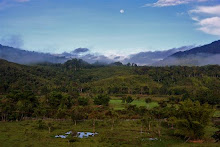
Aug. 25 (Bloomberg) -- After a stomach-churning takeoff from a 550-meter runway at Long Banga airstrip on the Malaysian side of the island of Borneo, the 19-seat plane soars over a green tropical wilderness. This is one of the world’s last remaining virgin rain forests.

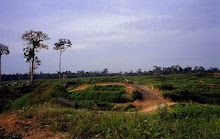
About 30 minutes into the flight to the bustling oil town of Miri, the lush landscape changes, and neatly terraced fields of oil palms take the place of jungle. Twenty years ago, this was forestland. Now, those forests are lost forever.

The shift from rain forest to oil palm cultivation in Malaysia’s Sarawak state highlights the struggle taking place between forces favoring economic development, led by Sarawak state’s chief minister, Abdul Taib Mahmud, and those who want to conserve the rain forest and the ways of life it supports.

It is actually not as simple as that. Conservation of a substantial area of the rain forest and the ways of life it supports is not incompatible with economic development, nor is the struggle merely against economic development - far from it. The so-called "economic development" that Taib Mahmud favours is not one which benefits the poorer segment of the Sarawak populace but only his family and a few favoured already-rich cronies.

During Taib’s 28-year rule, his government has handed out concessions for logging and supported the federal government’s megaprojects, including the largest hydropower site in the country and, most recently, oil palm plantations. The projects are rolling back the frontiers of Borneo’s rain forest, home to nomadic people and rare wildlife such as orangutans and proboscis monkeys.

At least four prominent Sarawak companies that have received contracts or concessions have ties to Taib or his family.

The number is more than that. See for example, "How Taib Uses Timber To Divide And Rule The Ibans".

Transforming Malaysia

The government of Malaysia plans to transform the country into a developed nation by 2020 through a series of projects covering everything from electric power generation to education. The country’s gross domestic product, which has been growing at an average 6.7 percent annual pace since 1970, shrank 6.2 percent in the first quarter.

In Sarawak, Taib’s government is following its own development plans that call for doubling the state’s GDP to 150 billion ringgit ($42 billion) by 2020. Sarawak Energy Bhd., which is 65 percent owned by the state government, said in July 2007 it plans to build six power plants, including hydropower and coal-fired generators.

What is the point of having a high GDP if the majority of Sarawakians are not going to benefit from it and will still live in poverty while the rich get richer?

The state government also wants to expand the acreage in Sarawak devoted to oil palms to 1 million hectares (2.5 million acres) by 2010, from 744,000 at the end of 2008, according to Sarawak’s Ministry of Land Development. Companies that formerly chopped down hardwood trees and exported the timber are now moving into palm plantations.

There is just not much commercial timber left and they don't want to replant. Why wait when they can reap the harvests from oil palm much earlier?

Lawsuits Filed

Meanwhile, many of the ethnic groups who have traditionally lived from the land in Sarawak -- known as Dayaks -- have filed lawsuits that aim to block some projects and seek better compensation.

Sarawak’s ambitions could be hindered by a lack of good governance, which would shut out overseas investors, says Steve Waygood, head of sustainable and responsible investment research at Aviva Investors in London, which manages more than $3 billion in sustainable assets.

What "lack of good governance"? There is no proper governance under Taib Mahmud at all.

“Even just the perception of corruption can lead to restricted inflows of capital from the global investment community into emerging markets such as Sarawak,” says Waygood, who wrote about reputational risk in a 2006 book, “Capital Market Campaigning” (Risk Books).

“The largest and most responsible financial institutions are very careful to avoid funding unsustainable developments,” he says.

Unilever, which buys 1.5 million tons of palm oil a year -- 4 percent of the world’s supply -- for use in products such as Dove soap and Flora margarine, announced in May that it would buy only from sustainable sources.

No Direct Purchases

“Unilever does not source any palm oil directly from Sarawak,” says Jan Kees Vis, Unilever’s director of sustainable agriculture. “We buy from plantation companies and traders located elsewhere.”

He says Unilever has committed by 2015 to buy all of its palm oil from sources certified by the Roundtable on Sustainable Palm Oil, a group representing palm oil producers, consumers and nongovernmental organizations that seeks to establish standards for sustainably produced palm oil. The Malaysian Palm Oil Association, a government-supported group of Malaysian plantation companies, is a member of the RSPO.

About 35 percent of the world’s cooking oil comes from palm -- more than any other plant, according to the U.S. Department of Agriculture. And 90 percent of the world’s palm oil comes from Malaysia and Indonesia.

Skittles and Soap

The oil is an ingredient used in everything from Skittles candy to Palmolive soap to some kinds of biodiesel fuel. Palm oil futures have climbed 45 percent this year as of Aug. 24 on concern that dry weather caused by El Nino may reduce output. Crude oil prices rose to a 10-month high of $74.24 a barrel, spurring demand for biodiesel.

Malaysia lost 6.6 percent of its forest cover from 1990 to 2005, or 1.49 million hectares, the most-recent data available from the United Nations Food and Agriculture Organization show. That’s an area equivalent to the state of Connecticut.

Neighboring Indonesia lost forestland at the fastest annual rate among the world’s 44 forest nations from 2000 to 2005, Amsterdam-based Greenpeace says.

“Palm oil is the new green gold after timber,” says Mark Bujang, executive director of the Borneo Resources Institute in Miri, a city of about 230,000 people in Sarawak. “It has become the most destructive force after three decades of unsustainable logging.”

While Malaysia’s palm oil exports have more than doubled to a record 46 billion ringgit in 2008 from 2006, according to the country’s central bank, the gain has come at a price.

And that price is being paid by the people who can least afford it, the downtrodden and oppressed rural poor of Sarawak.

Displaced People

Development projects and palm plantations have displaced thousands of people, some of whom have lived for centuries by fishing, hunting and farming in the jungle. Almost 200 lawsuits are pending in the Sarawak courts relating to claims by Dayak people on lands being used for oil palms and logging, according to Baru Bian, a land rights lawyer representing many of the claimants.

A handful of activists have been found dead under mysterious circumstances or disappeared, including Swiss environmental activist Bruno Manser, who vanished in the jungle in 2000.

Cutting down rain forests to cultivate palms in Sarawak has consequences far beyond Malaysia, says Janet Larsen, director of research at the Washington-based Earth Policy Institute.

The forests that are being destroyed help modulate the climate because they remove vast stores of carbon from the atmosphere. Chopping down the trees ends up releasing greenhouse gases.

‘Lungs of the Planet’

“These last remaining forests are the lungs of the planet,” Larsen says. “It affects us all.”

Chief Minister Taib, 73, has multiple roles in Sarawak. He’s also the state’s finance minister and its planning and resources management minister -- a role that gives him the power to dispense land, forestry and palm oil concessions as well as the power to approve infrastructure projects.

Until last year, Taib held the additional role of chairman of the Sarawak Timber Industry Development Corp., which fosters wood-based industries in the state.

Anwar Ibrahim, the former Malaysian finance minister who’s the head of the country’s opposition alliance, sees parallels between Taib’s rule and those of other long-standing leaders in Southeast Asia, such as former Indonesian President Suharto and former Philippine leader Ferdinand Marcos.

“It’s an authoritarian style of governance to protect their turf and their families,” says Anwar, who was fired as deputy prime minister by then Prime Minister Mahathir Mohamad in 1998 and jailed on charges of having homosexual sex and abusing power. The sodomy conviction was overturned in 2004.

‘Driven by Greed’

Sim Kwang Yang, an opposition member of parliament for Sarawak’s capital city of Kuching from 1982 to 1995, agrees with Anwar’s assessment. “It is crony capitalism driven by greed without any regard for the people,” he says.

Taib’s adult children and his late wife, Lejla, together owned more than 29.3 percent of Cahya Mata Sarawak Bhd., the state’s largest industrial group, with 40 companies involved in construction, property development, road maintenance, trading and financial services, according to the company’s 2008 annual report.

See also "A Small Part Of Taib Mahmud & Family's Corporate Empire".

Local residents jokingly say that the company’s initials, CMS, stand for “Chief Minister and Sons.”

In total, CMS has won about 1.3 billion ringgit worth of projects from the state and the federal government since the beginning of 2005, according to the firm’s stock exchange filings.

Taib declined to comment for this article. In an interview he gave to Malaysia’s state news agency, Bernama, on Jan. 13, 2001, Taib said CMS’s ties to him had nothing to do with its winning government jobs.

‘Not Involved’ in Contracts

“I am not involved in the award of contracts,” he said. “No politician in Sarawak is involved in the award of contracts.”

Not only is Taib a thief but a liar as well.

He told Bernama he doesn’t ask for special treatment of his sons. “I never ask anybody to do any favors,” he said.

But if they don't they're gone.

Mahmud Abu Bekir Taib, the elder of Taib’s two sons, is CMS’s deputy chairman and owns 8.92 percent of the firm, according to the annual report. Sulaiman Abdul Rahman Taib, the younger son and CMS’s chairman until 2008, holds an 8.94 percent stake.

Taib’s two daughters and his son-in-law are also listed in the annual report as “substantial shareholders.”

Taib’s History

Taib, a Muslim who belongs to the Melanau group -- one of about 27 different ethnic groups in Sarawak -- entered politics at the age of 27 after graduating from the University of Adelaide in Australia with a law degree in 1960.

He held various ministerial positions in Sarawak and Malaysia before taking over in 1981 as the chief minister from his uncle, Abdul Rahman Yaakub. Rahman, now 81, ruled Sarawak for 11 years.

Taib, who has silver hair, appears almost daily on the front pages of Sarawak newspapers, sometimes sporting a goatee and a pair of rimless glasses, at the opening of new development projects or local events.

He lives in Sarawak’s capital city of Kuching, an urban area of about 600,000 people on the Sarawak River. Its picturesque waterfront is dotted with colonial buildings, the legacy of British adventurer James Brooke, who founded the Kingdom of Sarawak in 1841 and became known as the White Rajah. Brooke’s heirs ruled the kingdom until 1946, when Charles Vyner Brooke ceded his rights to the U.K. Sarawak joined the Federation of Malaysia on Sept. 16, 1963, along with other former British colonies.

There was no "Malaysia" before September 16, 1963 for Sarawak to join. Malaysia was only formed on this date with Sarawak, Sabah and Singapore joining up with the states of the Malayan Federation.

Cousin’s Role

At Taib’s mansion, which overlooks the river, he receives guests in a living room decorated with gilt-edged European-style sofa sets, according to photos in the July to December 2006 newsletter of Naim Cendera Holdings Bhd., which changed its name to Naim Holdings Bhd. in March.

Naim is a property developer and contractor whose chairman is Taib’s cousin, Abdul Hamed Sepawi. He is also chairman of state power company Sarawak Energy and timber company Ta Ann Holdings Bhd., and is on the board of Sarawak Timber Industry Development Corp. and Sarawak Plantation Bhd.

Naim and CMS jointly built Kuching’s iconic waterfront building, the umbrella-roofed, nine-story Sarawak State Legislative Assembly complex. Naim has won more than 3.3 billion ringgit worth of contracts from the state and the federation since 2005, its stock exchange filings show.

Companies Respond

Ricky Kho, a spokesman for Naim, said the company declined to comment for this article. Naim’s deputy managing director, Sharifuddin Wahab, said in an interview with Bloomberg News in July 2007 that the chairman’s family ties weren’t why the company won government contracts.

“We have been able to execute our projects on time, we stick to the budget and the quality of what we hand over to the government is up to their expectations, if not more,” he said.

“Our teams have always acted professionally” when working with the government, whether on large or small projects, CMS’s group managing director, Richard Curtis, said in an e-mail. “CMS is governed by the strict listing regulations of the Malaysian stock exchange,” he said, adding that the chairman and the group managing director are both independent.

“The large projects carry with them an equally large risk, including a huge reputational risk, particularly for crucial projects by the government,” he said. “It is the government’s prerogative and discretion to award projects using a variety of approaches that includes open and closed tenders as well as directly negotiated processes, to the contractors and developers they feel will deliver the project as promised.”

Malaysia’s reputation as a place to conduct business has deteriorated in recent years, according to Transparency International, the Berlin-based advocacy group that publishes an annual Corruption Perceptions Index.

‘Monument of Corruption’

Transparency ranked the country 47th out of 180 in 2008, down from 43rd in 2007. Transparency also has singled out the Bakun Hydroelectric Dam, under construction on the Balui River in Sarawak, as a “monument of corruption.”

The index lacks fairness, says Ahmad Said Hamdan, chief commissioner of the Malaysian Anti-Corruption Commission, because it doesn’t take into consideration the size of the population of the countries in the ranking, for example.

“I’ve seen a lot of improvement in civil service in the past 10 years,” he says.

Sarawak Headhunter has also seen a lot of wild pigs flying in the jungles of Sarawak.

Dead Fish

Early this year, hundreds of dead fish started floating on the muddy river near the Bakun dam site. The fish were killed by siltation, which was triggered by uncontrolled logging upstream, Sarawak’s assistant minister of environment and public health, Abang Abdul Rauf Abang Zen, says. He says the Bakun dam has very strict environmental assessments and isn’t to blame for the siltation.

In January, Tenaga Nasional Bhd., Malaysia’s state- controlled power utility, and Sarawak Energy said they won approval from the national government to take over the operation of the hydropower project through a leasing agreement. Sarawak Energy also won preliminary approval to export about 1,600 megawatts of electricity from the 2,400-megawatt Bakun project, once it begins operating, to Peninsular Malaysia. The remaining power will go to Sarawak.

Taib announced a plan called New Concept in 1994. The aim was to bring together local people, with their customary rights to the land, and private shareholders, who would provide capital and expertise to create plantations. The plan called for companies to hold a 60 percent stake in the joint ventures, the state to own 10 percent and the remaining 30 percent to go to local communities in return for a 60-year lease on their land.

‘Emotional’ Disputes

That time period equals about two complete cycles of oil palm development. An oil palm typically matures in 3 years, reaches peak production from 5 to 7 years and continues to produce for about 25 years, says Nirgunan Tiruchelvam, a commodities analyst at Royal Bank of Scotland Group Plc in Singapore.

The policy has led to some disagreements. In his interview with Bernama in 2001, Taib said land acquisitions by the state have led to “emotional” disputes because some people seek too much compensation.

“We are not allowed to pay more than market value,” he told Bernama. He said people need to prove that they have traditionally lived in an area -- for example, by providing an aerial photograph -- in order for the state to grant them title to the land.

“If there are disputes, they go to the court,” Taib told Bernama.

Some local people say they received no compensation at all for their land. In Kampung Lebor, a village about a two-hour drive from Kuching, 160 families, members of the Iban group that was formerly headhunters, live in longhouses and survive by fishing and some farming. The Iban are Sarawak’s largest single group of Dayaks, who make up about half of the state’s 2.3 million population.

Land Overlap

In mid-1996, the state handed out parcels of land that overlapped with the community’s customary hunting and fishing areas to the Land Custody and Development Authority and Nirwana Muhibbah Bhd., a palm oil company in Kuching.

In mid-1997, the authority and the company cleared the land with bulldozers and planted oil palm seedlings, according to a copy of Kampung Lebor’s writ of summons filed to the High Court in Kuching.

Government ‘Cruel’

“The government is cruel,” says Jengga Jeli, 54, a father of five in Lebor. “Fruit trees have been cut down. It’s become harder to hunt and fish. Now we are forced to get meat and vegetables from the bazaar, and we are very poor.” Jengga’s village filed a lawsuit in 1998 against Nirwana, LCDA and the state government in a bid to get compensation.

The case was finally heard in 2006 and is now awaiting judgment, according to Baru Bian, who is representing the Iban in Kampung Lebor. Reginal Kevin Akeu, a lawyer at Abdul Rahim Sarkawi Razak Tready Fadillah & Co. Advocates, which is representing Nirwana and LCDA, declined to comment.

The cases show that the development projects, including plantations and dams, haven’t helped poverty among the local people, many of whom live without adequate electricity or schools, says Richard Leete, who served as the resident representative of the United Nations Development Program for Malaysia, Singapore and Brunei from 2003 to 2008.

Poverty Remains

“This is the paradox of Sarawak -- the great wealth it has, the natural resources in such abundance, and yet such an impoverishment and the real hardship these communities are suffering,” says Leete, who chronicled Malaysia’s progress since its independence from Britain in his book “Malaysia: From Kampung to Twin Towers” (Oxford Fajar, 2007). “There has no doubt been a lot of money politics,” he says.

Taib calls it the "Politics of Development".

In the rugged hills about 150 kilometers (93 miles) south of Kuching, some 160 Bidayuh families, known as the Land Dayaks, are clinging to their traditional habitat, while a dam is under construction nearby. They live by farming and fishing.

With only a primary school in the village, children have to go to boarding schools outside the jungle to get further education, crossing seven handmade bamboo bridges and trekking two hours over the hills when they return home.

The state has offered the Bidayuhs 7,500 ringgit per hectare, 80 ringgit per rubber tree and 60 ringgit per durian fruit tree in compensation for their native land, says Simo ak Sekam, 48, a resident of Kampung Rejoi, one of four villages in the area. In Rejoi, about half of 39 families have refused.

Bamboo Bridges

“We don’t want to move because we are happy here,” Simo says. “We feel very sad because our land will be covered with water. The young generations won’t know this land. They won’t see the bamboo bridges.”

The builder of the local reservoir is Naim Holdings -- the company headed by Chief Minister Taib’s cousin. The government awarded Naim the 310.7 million-ringgit contract without putting it out for bids. Naim’s statement announcing the deal in July 2007 said it won the job on a “negotiated basis.”

One of the most threatened groups is the Penan, nomadic people who live deep in the jungle on the upper reaches of the Baram River. On a steamy equatorial morning in late October 2007, Long Kerong village leader Kelesau Naan and his wife, Uding Lidem, walked two hours to their rice-storing hut. Kelesau, who was in his late 70s and who had protested logging activity in their area, told Uding he’d go check on an animal trap he had set nearby. He never came back.

Skull and Bones Found

Two months later, his skull and several pieces of his bones, along with his necklace made of red, yellow and white beads, surfaced on the banks of the Segita River. Inspector Sumarno Lamundi at the regional police station says the investigation is ongoing.

It was just the latest tragedy among activists working for the Penan since the early 1990s, when rampant logging took place. At least two other Penan were found dead, including Abung Ipui, a pastor and an advocate for land rights for his village. His body was found in October 1994 with his stomach cut open.

Manser, the Swiss activist for the rights of the Penan, vanished without a trace from the Borneo rain forests in May 2000 and was officially declared missing in March 2005.

Kelesau’s death has made the Penan willing to stand up for their survival.

“We are scared of something terrible happening to us if we don’t resist,” says grim-faced Bilong Oyoi, 48, headman of Long Sait, a Penan settlement close to Long Kerong.

Penans’ Resistance

Bilong, who wears a traditional rattan hat decorated with hornbill feathers, says his group is setting up blockades to resist logging activities. They are also working with NGOs to get attention for their plight and filing lawsuits.

With the help of the Basel, Switzerland-based Bruno Manser Fund, an NGO set up by the late activist, Bilong and 76 other Penan sent a letter -- which some signed using only thumb prints -- to Gilles Pelisson, the chief executive officer of French hotel chain Accor SA.

The letter urged Accor to think twice about partnering with logging company Interhill Logging Sdn. to build a 388-room Novotel Interhill in Kuching. The Penan community says Interhill’s operations in Sarawak have a devastating effect on them. Accor responded by sending a fact-finding mission to Sarawak to investigate Interhill’s logging activities.

“If the worst-case scenario occurs and if no action plan is implemented, we will not continue with our partnership,” Helene Roques, Accor’s director for sustainable development in Paris, said in June. In mid-August, she said she expects “good results” by the end of September.

Rio Tinto Venture

No foreign investor has made a larger bet on Taib’s development plans than Rio Tinto Alcan, a unit of London-based mining company Rio Tinto Plc. A joint venture between Rio Tinto and CMS for a $2 billion aluminum smelter has been negotiating power purchase agreements with Sarawak Energy for more than 12 months, according to Julia Wilkins, a Rio Tinto Alcan spokeswoman in Brisbane, Australia.

CMS meets Rio Tinto’s requirements as a joint-venture partner, she says. “CMS is a main-board-listed company with its own board of directors,” she says. “It has a free float of shares in excess of the minimum market requirement. The chairman and the group managing director are both independent.”

Malaysia grants special economic advantages to the country’s Malay majority and the local people of Sabah and Sarawak states on Borneo, collectively referred to as Bumiputra -- literally, sons of the soil.

Still, the country is leaving behind many of its ethnic minorities, says Colin Nicholas, a Malaysian activist of Eurasian descent who has written a book about the mainland’s oldest community, “The Orang Asli and the Contest for Resources” (IWGIA, 2000).

‘Completely Powerless’

One person trying to help the Dayaks is See Chee How, 45, a land rights lawyer who became an activist after meeting Sim, the former opposition member of parliament in Kuching.

In 1994, See witnessed an attack on Penan demonstrators who’d erected a roadblock to prevent logging trucks from driving through their land. A 6-year-old boy died after security forces used tear gas on the demonstrators, he says.

“They were completely powerless,” recalls the soft-spoken, crew-cut See, sporting a white T-shirt and a pair of jeans, in his office above a bustling market in Kuching. “They were depending on logging trucks to move around because their passageways had been destroyed by logging trails.” See now works with Baru Bian, 51, one of the first land rights lawyers representing the Dayaks in Sarawak.

Lawsuits and Votes

Nicholas says Sarawak’s people have to fight for their rights not only through lawsuits but by voting.

“The biggest problem we have with indigenous people’s rights is that we have the federal government and state government run and dictated by people who have no respect or interest for indigenous people,” he says. “We need a change of government.”

The prime minister’s office declined to comment.

Opposition leader Anwar says change is possible. His alliance won control of an unprecedented five states in Peninsular Malaysia in a March 2008 election. Malaysian Prime Minister Najib Razak’s ruling coalition has lost at least four regional polls held this year.

“I think this is a turning point,” Anwar says.

Still, Taib’s coalition won 30 of Sarawak’s 31 seats in March 2008 parliamentary elections. That helped the ruling National Front coalition led by then Prime Minister Abdullah Ahmad Badawi retain a 58-seat majority, ahead of Anwar’s People’s Alliance. Sarawak is due to hold the next election by 2011.

Taib defended his government’s program to turn forestlands into oil palm plantations as a way of improving living standards for the Dayaks at a seminar on native land development in Miri on April 18, 2000.

“Land without development is a poverty trap,” he said, according to his Web site. Many Dayak people, who have seen their land transformed as a result of Taib’s policies and companies linked to him, say they are still waiting to see their share of wealth.

Land with development is Taib's trap. The Dayak can wait for their share of wealth, they will never see it until they get rid of Taib.

To contact the reporter on this story: Yoolim Lee in Singapore at yoolim@bloomberg.net

Sunday, August 30, 2009

Senyum Kambing - Kepala Lembu Di Shah Alam


ATAU


Bukti bahawa UMNO Dalang Insiden Kepala Lembu:


Dan juga, sila lihat blog ini.

Friday, August 28, 2009

Merdeka For Sarawak!

A reminder to all Sarawakians to ponder as the Malayans celebrate their Independence Day this 31st August, 2009:

"How Sarawak Was Conned Into The Formation Of Malaysia".

Independence For Sarawak!

Sarawak Headhunter

Senyum Kambing - Tunjuk Semangat Patriotik

Thursday, August 27, 2009

Wednesday, August 26, 2009

Merdeka? What Merdeka?


See also "Pengemis Kemerdekaan Yang Tercicir?"

Senyum Kambing - Masyarakat Berbilang Kaum Kekuatan Malaysia

Seminar Hak Tanah Adat Di Long Banyok, Baram


Thursday, August 20, 2009

Seminar Hak Tanah Adat Di Long Banyok Baram

Bagi semua penduduk kampung dari kawasan Baram Tengah dan Tutoh Apoh,tuan/puan dialu-alukan untuk menghadiri Seminar Hak Tanah Adat yang akan diadakan di Long Banyok Baram seperti maklumat di bawah. Turut hadir ke program ini adalah jemputan Khas dari NGO, TAHABAS yang dijangka memberi ceramah kesedaran tentang Hak Tanah Adat Orang asal dari perspektif perundangan.

Tempat: Kampung Long Banyok Baram
Tema :"Daleh Ilu Tana Ilu, Tana' Ilu Udip Ilu"
Tarikh: 20 Sept 2009 : Bermula 8.00pm
21 Sept 2009: Bermula 8.00am-3.00pm

Jemputan : Semua penduduk kampung Long Banyok Baram dan juga penduduk dari kampung-kampung dari Baram Tengah dan Tutoh Apoh. Bagi semua tetamu, pihak penganjur ada menyediakan penginapan dan makanan. Sambutan tetamu dijangka hingga pukul 5.00 ptg, 20 Sept 2009.

Untuk memudahkan persediaan awal, perwakilan dari semua kampung dinasihatkan memberi butiran jumlah yang datang dan masa dijangka tiba.

Untuk maklumat lanjut dan pertanyaan, sila hubungi individu di bawah:

En Charles Gau:019-8331578
En Vinsien: 019-8155177
En. Anthony Saging: 016-6548684
En Simon Thomas: 019-8866850

Nota daripada Paul Raja (di bawah ini):

Beberapa Peguam Orang Asal yang berpengalaman dalam undang-undang tanah adat hak bangsa asal seperti Harisson Ngau, Paul Raja, Ali Basah dan Abun Sui dijangka hadir untuk memberi ceramah pada masa itu.

Senyum Kambing - Pembalakan Jejaskan Sumber Makanan Orang Penan

Saturday, August 22, 2009

BN's Chickenshit Minister Of Misinformation Shows His True Colours


Another uncouth, uncultured, arrogant UMNO boor

Thursday, August 20, 2009

The 2nd Great Highway Robbery


Proposal submitted to take over Plus Expressways

from Malaysian Insider

Comments by Sarawak Headhunter in red.

KUALA LUMPUR, Aug 19 — A proposal to take over Plus Expressways from the state by former executives of the listed highway concessionaire has been submitted for consideration to the country's powerful Economic Planning Unit which oversees privatisations.

After the first privatisation failed, how is it possible that a second privatisation, by parties who were involved in that first privatisation, is even being considered by the government? Hasn't the government learnt its lesson? Or are we about to witness another Great Highway Robbery about to take place? ALL at the expense of the Malaysian taxpayer and tollpayer.

According to executives familiar with the matter, the senior executives include Ibrahim Bidin who used to be chief executive of Plus over five years ago.

Ibrahim was also a key lieutenant of Halim Saad, the former owner of the Renong conglomerate, the previous owner of Plus until the government took over all the assets in late 2001.

This means that Ibrahim Bidin was instrumental in helping Halim to rob Plus - on behalf of Daim Zainuddin, Mahathir and UMNO - it must be said, and to cover up that robbery as well.

Halim's name, however, does not surface in the proposal although the market speculation is that he could be linked to the offer. But the tycoon has told some analysts that he isn't involved.

Even if Halim really isn't involved this time, what about Daim Zainuddin on behalf of Najib? This is not mere speculation, as Sarawak Headhunter will make clear below. Halim was in any event nothing more than a highly-paid glorified nominee for Daim Zainuddin. The pertinent question now is who is Ibrahim Bidin going to be a highly-paid glorified nominee for?

No details of the offer were immediately available but the executives said that if the proposal was accepted, the new owners of Plus were prepared to cut toll rates by at least 20 per cent. It seems likely, however, that they would also ask for an extension of the concession period.

With the kind of cashflow that Plus has, they can very well afford to cut the toll rates, but we better believe that they are not going to do anyone any favours by doing this, palatable though it may sound - it is just a trick.

They will undoubtedly get much more back from the extension of the concession period, but then again we must not be so naive as to believe that they will wait for the extension period to commence the robbery.

The robbery will commence immediately and will go into full gear when they can leverage the future earnings from the toll collections over the extended concession period. This was partly how it was done earlier. The same modus operandi will probably be used again.


It isn't clear if the government would agree to Plus's privatisation: it is the crown jewel in the United Engineers conglomerate — the former Renong group — with the strongest cash flows.

How else would Najib maintain his power and position in UMNO? And how else would Najib and UMNO be able to steal the next General Elections from Pakatan Rakyat?

The vast amounts of money (tens of billions) which Daim Zainuddin siphoned off from Plus and other corporate vehicles - which were supposed to be UMNO's but became only UMNO-linked through nominees like Halim Saad after the deliberate demise of the old UMNO (masterfully engineered by Zaki Tun Azmi) - was what kept Mahathir and UMNO in power for so long.

Now Najib out of desperation is trying to steal a page from this old book so that both he and UMNO can stay in power.

How much Daim Zainuddin used for this purpose and how much he kept for himself is another story. As far as Sarawak Headhunter is concerned, Daim Zainuddin is Malaysian Public Enemy no. 1 (Mahathir is only no. 2 and Taib Mahmud no. 3).

The tens of billions which they intend to rob through this and other piratisation schemes will be used to bribe the whole hierarchy of UMNO to maintain the status quo during each UMNO party elections and also the Malaysian voters as a whole during general elections.

Moves are right now being put into motion for Najib's men to take over all the money-making apparatus of the Government, especially Khazanah and PETRONAS.


According to the executives, however, it could form part of a new plan where the government would divest some of the assets of government-linked companies like United Engineers and Sime Darby to private hands.

Don't say we were not warned or we were not aware of what they planned to do. They have already done it under Mahathir's regime and they will continue to do it under Najib's regime.

This 2nd Great Highway Robbery will be done in broad daylight, in full view of the Malaysian public and will be executed by these executive nominees like Ibrahim Bidin with the connivance of a compliant administration and lawyers, accountants, merchant bankers, stock brokers and supposed government regulators as co-conspirators.

All will be done in the name of "Malay" interests and anyone who denounces it will be counter-denounced as a "traitor" to the Malay race.


It also isn't clear how the deal's promoters plan to fund it. The firm, which principally operates a highway traversing the length of Peninsular Malaysia, made a net profit of RM1.1 billion on revenues of almost RM3 billion.

This is "kacang" as they say, after all don't they also control the banks and other government investment agencies who would be more than willing to fund it, since they can justify - at least on paper - its viability? Paper losses will be taken care of later of course - the theory being that since they will still control Parliament and thus the Federal Government, this will also be "kacang".

Peanuts to them, hundreds of billions to the rest of the Malaysian people.


Will enough number of Malaysian voters continue to be fooled or bribed into giving these crooks - who hide behind the name of the Malays and Islam - yet another mandate in the coming Sarawak State Elections or in the next General Elections?


It is 64 per cent owned by United Engineers which is itself wholly owned by Khazanah Nasional, the investment agency of the federal government. At present market values, that 64 per cent is worth RM10.5 billion.

The North-South Expressway was completed in the 1990s by Halim's Renong group. The tycoon leveraged the tolled road into a bewildering slew of businesses from telecommunications and banking to construction and infrastructure.

Take note of the key word above - "leveraged". The mastermind behind all this was not Halim but Daim Zainuddin.

Indeed, Halim, now 55, helped create modern Malaysia. Renong, which at its peak had assets of over RM40 billion, built highways, sport stadiums, bridges and mass rapid transit systems. But the group also racked up debt of over RM20 billion which left it vulnerable to the Asian financial crisis.

The amount was closer to RM25 billion. How could a conglomerate with assets of over RM40 billion rack up debts or rather losses of close to RM25 billion? This was the amount that was siphoned off by Daim Zainuddin, less maybe a couple of billion for mismanagement expenses.

In late 2001, after Halim had unsuccessfully tried out various restructuring schemes, Kuala Lumpur lost patience and effectively nationalised Renong by taking over affiliate company United Engineers.

It wasn't a simple matter of losing patience, the government nationalisation was the cover-up. Hasn't anyone wondered why with the government taking over, the tolls still kept on increasing, the reason always being given that otherwise the government would would have to compensate the toll operator?

If the government now owns the toll operator, why would it have to compensate itself?

The answer is that they are still covering up, now using government money - the people's money - of course, the latest "compensation" recoverable as at 30th June this year being RM2.18 billion, according to this report in the Star.

Only in Malaysia could the ruling elites have engineered such a perfect crime and get away with it and still lay claim to the gratitude of the Malays in whose name it was committed but who have benefited only marginally.

But sooner or later they will have to answer for all that they have done. Judgment Day will come and they may find themselves on the Highway to Hell. The toll will be their souls.


Halim stepped down from the board and has since adopted a low profile although he continues to run businesses in Malaysia and abroad. — Business Times Singapore

The latest heard of him is that he has teamed up with another former Daim Zainuddin nominee, Samsuddin Abu Hassan. Is Daim still pulling their strings and also that of Ibrahim Bidin?

Keep a watch out Malaysia, be very very careful and ever vigilant!

Senyum Kambing - Pembangunan Atau Perompakan?

Wednesday, August 19, 2009

Matek Anak Geram In Mukah

Iban farmer arrested for defending his NCR land

Matek Anak Geram, an Iban farmer, a member of TAHABAS (Sarawak Native Customary Rights Network) and Committee Member of Jaringan Orang Asli SeMalaysia (JOAS) was arrested by the police on 13 August 2009 for the crime of allegedly restraining the workers of an oil palm plantation.

Unarmed, he was taken into custody by 10 fully-armed police personnel at 8.45 am and detained for two hours at the Mukah Police Station and charged for allegedly wrongfully restraining the workers of an oil palm plantation company, Saradu Plantations Sdn. Bhd. under section 341 of the Penal Code before being released on bail.

For over a year, Matek and his immediate family have been guarding their property against Saradu Plantations who have been encroaching on their native lands.

In individual shifts, they have blocked an access road built on their land.

JOAS questions the heavy use of force and intimidation against one unarmed man and calls for neutrality of the state infrastructure in this legal dispute between the private company and indigenous peoples.

Saradu Plantation Sdn. Bhd. is a Sarawak oil palm company, which has been given 15,000 hectares of land by the state government to develop oil palm in Balingian.

Saradu is also linked to the Sarawak Chief Minister as his brother-in law, Robert Geneid and sister, Raziah Mahmud are majority shareholders of the company.

JAOS said: “Matek Geram’s case is just one of hundreds of land encroachment and conflict cases between indigenous peoples and oil palm plantation companies in Sarawak.

“In light of this, JOAS reiterates its support for the recent call from TAHABAS and other indigenous peoples organisations for a moratorium on plantation development projects.

“JOAS reiterates its position that the State Government-issued provisional leases are encroaching illegally into our constitutionally-recognised customary lands and forests.

“Until the government moves towards a meaningful solution with the full and effective participation and consent of indigenous peoples, incidences like Matek Geram will continue to take place throughout the state, to the detriment of the rights of indigenous Sarawakians, the sustainable development of the Sarawakian population and the image of the state of Sarawak and Malaysia,”
it said.- The Broken Shield

Saturday, August 15, 2009

Friday, August 14, 2009

Geram In Baram


OPEN LETTER TO OUR REPRESENTATIVES


Dear YB Dato Jacob Dungau Sagan and YB Lihan Jok.

Without prejudice.

"Are you defending us your voters in Baram or defending Taib?"

YB Dato Jacob Dungau Sagan our MP for Baram during a visit to Kampung Long Banyok, Baram recently told his audience not to listen to those who oppose the proposed Baram hydro project or dam sited between Kampong Long Nahah'a and Kampung Long Kesseh in the middle Baram. YB Jacob even said that he has been forewarned by the authorities that the dam will be implemented elsewhere and the billions of ringgit worth of projects associated with it will also be channelled elsewhere if the Baram people opposed the dam.

YB Lihan Jok on the other hand has said that the proposed dam is "God's gift" to the people in Baram.

But then, Dato Jacob, what is the worth of all the timber from Baram extracted by the big companies all these years? Surely, they were worth hundreds of billions of ringgit. And the remaining timber? Surely, they are at least worth tens of billions of ringgit too. And what about our NCR lands in Baram now illegally alienated by your BN boss, Taib Mahmud, also to the big companies for oil palms and acacia trees? Surely, they are not only worth hundreds of billions of ringgit but will generate tens of billions of ringgit in time to come.

For many terms now you are our wakil rakyat, our MP. Now you are even a Deputy Minister. Do you understand what the roles of wakil rakyat are? You are holder of a master's degree. Surely you know that.

As a wakil of the rakyat of Baram, surely you know it is your most important role to act, speak and fight for and to defend the rights and interests of the rakyat of Baram without whose vote you would not have been what you are today.

So why is it that you have to go along with Taib and the BN govt in threatening the people of Baram that if they do not support the proposed dam, the dam will not only be relocated elsewhere but so-called projects worth so-called billions of ringgits associated with the dam will be channeled elsewhere?

Is it because you want to save your post as Deputy Minister that you so readily support Taib and the BN to threaten our Baram people on the dam? If you do, that means you have abused our trust, mandate and votes as your real purpose is not to be our wakil rakyat but wakil your own personal pocket, agenda and interest!

If you are scared to stand up to speak, fight and defend the rights and interests of the Baram people then you are definitely UNFIT to be our wakil rakyat. A wakil (leader) must be courageous like our ancestor warriors!

There is no point that you became Deputy Minister and enjoy all the many perks and privileges from it but your rakyat in Baram who had steadfastly voted for you for many many terms are continually bullied, humiliated, threatened or held to ransom (with withdrawal of so-called projects) and robbed of our NCR lands and all our resources in it.

If you do not speak out, fight and defend us, then, you are not only failing us as our wakil rakyat but are also consciously SIDING with Taib and the BN and the big companies who robbed and are still robbing us of our rights, our NCR lands, our resources, etc.

Surely, you are fully aware of the continual and aggravating problems faced by the settlers of the Batng Ai and the Bakun dam! If not, pay a personal visit there and talk to the settlers directly about their situation. And don't talk out of ignorance or worse still just simply parrot what your bosses Taib and Jabu (who caused his own Iban people to continue to be the poorest in Malaysia today) say.

Remember! Taib, Jabu, James Masing and the BN also said or promised the same thing before, that the Batang Ai and Bakun dams will bring progress and development! But today they all have abandoned the people affected. SUHAKAM commissioners who personally visited Bakun recently reported that the problems faced by the settlers are worsening!!!!! And the Penans in Belaga are even facing food shortages!!!

YB Lihan Jok, don't simply sell God's name especially when it involves something that destroys HIS blessings, gifts and creations to the people of Baram, namely, the mighty Baram river, our NCR land and its resources and environment which all have supported our people for many many generations without which you and YB Dato' Jacob won't be what you are today.

Remember, it was not Taib, Jabu or the BN that provided your parents the means and resources to send you to school. It was the NCR land that God blessed your parents with and its resources in Baram that enabled your parents to send you to school.

By the way, if you really believe and trust in GOD, then protect and defend God's creations, gifts and blessings, namely, our Baram river from being dammed by Taib!

Don't be afraid but stand courageous and put your complete trust in God's protection of your position as YB, as wakil rakyat or your post as Deputy Minister (like what God did to Daniel when he was thrown into the lions den).

Also do not be worried of being blackmailed or held to ransom with the threat of projects and billions of ringgit to be withdrawn from Baram if we do not support the Baram dam. Those are but only human or worldly threats from Taib, Jabu and the BN! GOD is still the ALMIGHTY One above them. GOD will still provide all our needs according to what we deserve to get from HIM.

Unless you do not trust GOD but your bosses Taib and Jabu!

Hope to hear an early response from our two YBs soon on this.

BARAM VOTERS

Senyum Kambing - Parai Kitai!

Thursday, August 13, 2009

Who Is Shahrizat Protecting?


Shahrizat stonewalls on 'sexual abuse' report


from Malaysiakini

Keruah Usit
Aug 12, 09
11:59am

Minister for Women, Family and Community Development Shahrizat Abdul Jalil has been resisting mounting pressure to make public a controversial report on the alleged rape and sexual abuse of Penan girls in Sarawak.

Civil society groups have documented 15 reports of alleged rape or sexual abuse of young Penan girls in the Baram area by logging workers. Many of the survivors are minors.

The allegations provoked national outrage when the stories of two teenagers from Long Item and Long Belok were highlighted in the mainstream media last year. The reports described unwanted pregnancies as a result of the sexual abuse.

Survivors have said reports made to the Sarawak police have been disregarded. They claimed the police told them investigations could not be successfully carried out, because the alleged crimes had been committed in remote areas.

The Bar Council, the Women's Aid Organisation (WAO), Suaram, and other civil society groups called for Bukit Aman to send an investigative team to the Baram villages.

The groups said last year that a police report on the alleged rape of a 12-year-old Penan girl had been made as far back as 1994, yet no meaningful attempt at investigation had ever been carried out.

“There has been a loss of confidence in the Sarawak police force,” then Bar Council head Ambiga Sreenevasan argued last October.

Sarawak Police Commissioner Mohamad Salleh said the police could not act without official reports, but victims have accused the local police of refusing to accept reports.

Deputy Chief Minister Alfred Jabu anak Numpang treated the rape allegations with contempt. He dismissed the claims as unfounded, without waiting for any investigation by the police.

“I have not heard of any such complaints from Penan communal leaders in my many trips to ulu Baram,” said Jabu, chief of the state government's steering committee on the Penan.

Marudi district police chief Jonathan Jalin echoed Jabu, saying police had interviewed teachers from Long Item and Long Belok, but “the teachers told us they had received no reports on the matter”.

Jalin went on to say that police had also interviewed workers from the two logging companies operating in the area, and had found no incriminating evidence. He did not mention whether the survivors of alleged abuse or their families had been interviewed.

The appeals by civil society groups to Bukit Aman have also been ignored after it initially promised to investigate the reports.

Silence not explained

The only 'investigations' that have been made public were on the front page of a local newspaper, the Borneo Post, owned by KTS, a logging company.

A team from the newspaper interviewed several villagers from Long Item and Long Kawi, and reported that those interviewed had not heard of any cases of sexual abuse.

The Borneo Post went on to report that a Chinese man, referred to as 'Ah Heng', a worker at a timber camp, had said he is “married” to one of the alleged survivors of sexual abuse and admitted he had fathered her two children.

However, 'Ah Heng' could not substantiate his claims of marriage. Local sources alleged that the girl herself and her parents continue to insist that 'Ah Heng' had forced himself on her over several years.

Around the same time as these articles, two large logging companies - Interhill and Samling - made unsolicited public statements denying that their employees were involved in sexual abuse of girls from local communities.

Civil society groups turned to the federal government to seek redress for the victims and to protect the vulnerable Penan from logging workers.

Shahrizat's predecessor Ng Yen Yen responded by sending her ministry's task force to Baram last October.

The team was headed by director-general Dr Noorul Ainur Mohd Nur and included representatives of the Women's Centre for Change (WCC) and WAO.

Ng had claimed the cabinet “was very supportive” of the task force.

“We are very focused on looking into the plight of Penan women and girls…we must ensure that Penan women are protected and not exploited,” Ng said.

The report was submitted to Shahrizat last November. However, nine months later, she has continued to refuse to release the report to the public.

“Interested parties can come to the ministry, and we can discuss the details of the report,” she said.

Shahrizat did not offer to transport Penan women from rural Baram to visit her ministry to discuss the report.

“So long as the report is not shared with the public, the Penan community continues to become more vulnerable,” said WAO executive director Ivy Josiah (left), a member of the task force.

Prema Devaraj of WCC, another member of the team, noted: “The public has a right to know the outcome of the investigation, and what the government plans to do with regard to the information in the report.”

Shahrizat has declined to answer questions regarding the findings. She has also refused to provide any reasons for with holding its recommendations from the public.

The deprived region of Baram is vast: it covers an area larger than Selangor. The rural poor in remote areas remain in the thrall of the wealthy timber, plantation and dam-building companies.

The Sarawak government continues to assert that logging brings development to rural communities.

The elite of the state and the federal governments, the police, the mainstream media, and the mammoth logging companies have shown close historic cooperation, in crushing dissent against logging.

Frustrated civil society groups see the suppression of the 2008 report on sexual abuse of Penan girls as another example of this collaboration.


KERUAH USIT is a human rights activist - anak Sarawak, bangsa Malaysia. His 'The Antidote' column, which appears in Malaysiakini every Wednesday, is an attempt to allow the voices of marginalised people to be heard all over Malaysia.