Monday, September 22, 2008

Visit to Belaga

From Dayak Baru Weblog by Dr. John Brian Anthony

Visit to Belaga

Purpose of visit

I was invited to give talk in Belaga related to the well-being of womenfolk in the area.

Route to Belaga

There are 4 routes to Belaga. The most common route is by “Express River Boat” service from Kapit which will take approximately 5 hours and the fare is about $50.00 one way. The second route is by plane which lands at a tiny airstrip down river that is about 45 minutes boat ride to Belaga town. The third route is through the Bakun dam which is upstream to Belaga and it takes 1 hour by “Express River Boat” usually leaving at 5.30am to 6am.

The fourth routes takes about four and half hours from Bintulu town using the road to Bakun where the junction entrance to Belaga is slightly before reaching Tubau town. The signage is well displayed at the junction.

Gated Entrance to Belaga

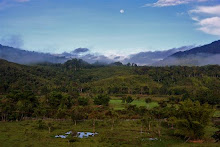
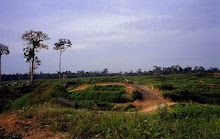
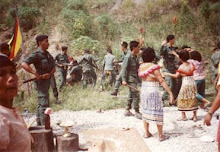
The road entrance to Belaga is gated and manned by private security guard with an iron pipe acting as the bar across the road. You are actually entering into a private property belonging to KTS Group for tree replanting project. I was made to learn that the area given to KTS is only 90,000 hectares and the area that has been replanted is at most about 1000 hectares. At this rate of replanting of trees how many decades would KTS take to complete the work? Read more

Transparency & Accountability In Sarawak?

PRESS RELEASE JUNE 21, 2007

Approval of Plantation Projects in the Bakun Catchment Area between 1999 and 2002: SAM Calls for Transparency and Accountability in Sarawak

SAM is shocked to learn recently that between 1999 and 2002, three huge plantation projects, which are largely located within the Bakun catchment, have been approved by the Sarawak state government. The Environmental Impact Assessment (EIA) reports for the projects were approved between 2000 and 2003.

In an effort to counter mounting criticisms against the Bakun Hydroelectric Project, from 1995 to 2001, several of our Federal ministers have promised that the 1.5 million ha Bakun Catchment Area, a mostly forested region, will soon be gazetted in order to protect the dam. As a matter of fact, our then Deputy Prime Minister himself was widely quoted by local newspapers on March 13, 1996 stating that “we should realise that we will gazette a catchment area covering 1.5 million hectares which may not have been created if the Bakun project is not implemented.”

However today, three projects have been approved in the catchment – the Shin Yang Forest Plantation located in the Murum river basin (155,930 ha), the Bahau-Linau Forest Plantation (108,235 ha) and the Merirai-Balui Forest Plantation (55,860 ha). Both Bahau-Linau and Merirai-Balui, owned by a subsidiary of Rimbunan Hijau, will be establishing pulp and wood tree monocultures while Shin Yang, owned by Shin Yang Forestry, is also undertaking oil palm cultivation. Actual cultivation areas of such plantations will typically cover between 50 and 60 percent of the total concession areas.

The Bakun reservoir catchment comprises some 20 sub-catchments. The main river draining the catchment is the Balui, which in turn is fed by the Murum, Bahau and Linau Rivers. According to the Bakun EIA reports themselves, the annual sediment load in the catchment had jumped from 11 to 29 million tonnes between 1983 and 1993 alone, which can largely be attributed to the advent of timber harvesting activities in the area.

Thus the establishment of plantations in the upstream reaches of Bakun will surely spell a disaster for the dam since such plantations will entail clear-cutting and periodic harvesting and an increase in erosion and siltation rates. Fast growing wood trees would involve cropping cycles of between 10 and 25 years while oil palm will reach its maximum productivity level after 25 years.

The approval of the plantation projects not only violates the promises made by government officials since 1995, but it also contradicts the many recommendations made by the Environmental Impact Assessment (EIA) reports for Bakun.

The Environmental Management Plan (EMP) for Bakun, attached as Appendix 6 to the EIA reports, notes that in areas where rapid forest regrowth is expected, future logging should be controlled to reduce siltation and the sediment load reaching the reservoir. The same also applies to the largest source of sediment associated with land clearing in the catchment above the reservoir inundation limit. In the long-term, prudent land use management for the catchment must be introduced, one which is based on the principle that the highest and best use of the catchment is the uninterrupted supply of quality water to the reservoir. This is also the fundamental position recommended in the Annex 4 of the EIA for Reservoir Preparation, which details the rationale and requirements for the catchment management of the dam.

Further, a Catchment Management Plan is supposed to have been developed by the project owner, a guide document to address the requirements for the optimum and sustainable utilisation of the catchment resources, emphasising the priority of securing the supply and storage of water.

Hence, how these projects for the plantations were approved in the first place remain a mystery.

All these bring us to the question of the transparency in land and forest governance matters in Sarawak. The Bakun EIA process itself was approved amidst much controversy in 1995 when it was discovered that the Federal Environmental Quality Act 1974 (EQA) was retrospectively amended to allow the authority of the EIA approval for certain projects in Sarawak to be transferred to the Natural Resources and Environment Board (NREB) which is subject to the Sarawak Natural Resources and Environment Ordinance 1994 (SNREO).

Unlike the EIA requirements in Peninsular Malaysia, the law in Sarawak excludes public participation in the EIA process, unless the project proponent so desires. As a result of this exclusion, today, the nature of the EIA process in Sarawak is non-transparent and contrary to good governance, as there is no right given to the public to give feedback prior to EIA approvals.

This is also the case in relation to the EIA approval for the three plantation projects above. Unsurprisingly, we had found several shortcomings in them.

Although all three reports mention their close proximity to the dam, they do not devote serious attention to the matter other than offering some mitigation measures. Reports for both of the Rimbunan Hijau projects while confident that their mitigation measures will be able to reduce sediment load to the dam, also casually notes that it would be almost impossible to accurately predict the magnitude of soil erosion that will occur when the plantation is harvested in 15 to 20 years. The reports also briefly mention that the question of allowing plantation developments in the catchment area is a policy matter that only the Sarawak Chief Minister who is also the Minister of Planning and Resource Management could decide. Thus, it is then assumed that if the projects have been approved, then all such concerns must have been adequately considered, in spite of the flawed EIA process mentioned above.

Meanwhile the Shin Yang project, which is located only 13 km above the dam, makes the gross error of boldly stating that there are no permanent settlements within their project area. SAM has managed to document the existence of at least five Penan settlements in the vicinity, which include Long Peran/Menapa, Long Singu, Long Luar, Long Tangau and Long Pelutan. The existence of several Penan communities in the area can easily be verified by official records of the Belaga District, the Bakun EIA reports, anthropological studies and even the famed Oxford University Expedition to Sarawak in 1955. Today, the affected peoples' livelihoods and access to clean water have been severely threatened with the degradation of their land.

We therefore demand an explanation from both the Federal and State authorities as to how these plantation projects were approved contrary to the previous promises made and the recommendations contained in the Bakun EIA reports.

Further, given the lack of transparency in the issuance of forestry licences and approval of plantation projects in sensitive ecosystems, as well as the lack of public consultation prior to all EIA approvals, we call upon the Sarawak state government to amend the existing law relating to the EIA process and allow for public participation and scrutiny prior to the approval of the EIA reports in the state, especially for logging and plantation projects. It is scandalous that the Sarawak EIA process does not follow that which exists in the Peninsula. It is time that this is rectified, in the light of the approvals given to the plantation projects in the Bakun Catchment Area.

S.M.Mohamed Idris

President

Wednesday, September 17, 2008

Aspects of Malayan Colonization of Sarawak

Federal tutelage and betrayal: Sarawak 1965 to 1967

Large animated Malaysian flag clip art for a white background"During the 1965 troubles, Chief Minister (Stephen Kalong) Ningkan took care to emphasise that disputes should be settled in Sarawak without intervention from Kuala Lumpur. While he had been actively cooperating with the Federal Government, particularly on matters of economic development, he was not in sympathy with some federal policies. For example, he did not believe that Malaya's communal policies were necessarily appropriate for Sarawak.

He resisted efforts to speed up Malayanisation of the Sarawak civil service, preferring instead to Borneanise the state administration. Likewise, he resisted increasing pressures to accept Malay as the sole official language for Sarawak in 1967 so as to harmonise with the timetable established for Peninsular Malaysia. Perhaps even more galling to Kuala Lumpur was his statement that he favoured Iban and Chinese as official languages for Sarawak, along with Malay and English. He also objected to federal funds being given for support of Islam and firmly supported the special position of Sarawak as defined in the Malaysia Agreements and the 20 points of the Inter-Governmental Committe Report.
..While the Malayan Alliance leaders tried to influence the outcome of the Sarawak dispute in 1965, that crisis was settled without decisive intervention by Kuala Lumpur. Such was not to be the case one year later. During the interval, relations between Kuching and Kuala Lumpur had become strained, making the latter more determined to engineer the overthrow of the Ningkan government.

When Tunku Abdul Rahman visited Sarawak in February 1966 he tried to revive the idea of a Native Alliance, this time under the guise of a United Malaysian National Organisation for Sarawak. Behind-the-scenes efforts continued for months in an effort to forge a three-party UMNO type coalition to topple Ningkan's government, but such a union was difficult to construct. Pesaka, while keeping on good terms with Kuala Lumpur, was suspicious of a Malay-native union, hoping instead to create a united native movement by absorbing SNAP or providing the leadership for a Pesaka-SNAP merger. Although a Malay party, PANAS had a strong sense of local loyalty and resented political directives from Kuala Lumpur. Furthermore, since it represented many of the more educated Malays from the Kuching area, its members expected to benefit from Ningkan's program of Borneanising the civil service. Only BARJASA seemed to be enthusiatic supporters of Kuala Lumpur's proposed realignment."

Extracted from Gordon P. Means, Malaysian Politics (1970).

It should be noted that the Secretary-General of BARJASA at the time was one Inche Abdul Taib bin Mahmud.

Open Letter to Anwar Ibrahim from Sarawak Headhunter

YB Saudara Anwar Ibrahim,
Leader of the Opposition,
De-facto leader, Keadilan.

Dear Saudara,

Strike Now!

If Pakatan Rakyat really do have the numbers, strike NOW! IMMEDIATELY! Do not wait any longer. Your bluff has been called. Do not hesitate, thereby allowing your opponents to regroup and strike back. Seek an audience with DYMM the Agong and get it over and done with. BN is dying. Give it the coup de grace. 25 million Malaysians depend upon you to do it and do it quick.

Do not hesitate as you did with Mahathir 10 years ago. You said you were naive then, do not be naive now. You are the Leader of the Opposition. Do not let your supporters down. Politics is not a gentleman's game and your opponents are not gentlemen. Do not expect them to play fair - they have never done so and they never will.

Do not give them even the space of the pin-point of a needle to manouevre. Do not be misled by notions of chivalry or mercy, they will show you none if they were in your place, indeed they have not shown you any.

Malaysia depends on you to seize the moment, not to grant respite. I beg you, for the sake of the rakyat whose cause you espouse, do not blink as you did 10 years ago. Malaysia cannot afford more prolonged agony under the BN. Bring it out of its misery NOW.

A grateful nation may yet hold together and unite behind you, but not if you falter at this critical moment.

We, the rakyat expect this of you. Do not betray our hopes and expectations.

Yours sincerely,
--
Al Tugauw
Sarawak Headhunter
Unofficial Leader
Sarawak Resistance

Can Sarawakians Really Expect a Born-Again Malaysia?

Welcome to a born-again Malaysia!
The Malaysian Insider

SEPT 16 - This is perhaps the second Sept 16 so many Malaysians have been excited about. The first, of course, was 45 years ago, in 1963. Probably for simplicity sake, the coming together of Malaya, Sabah, Sarawak and Singapore as one nation was supposed to be on Aug 31, the same date as Malaya"s independence.

But as fate, and opposition from Indonesia and the Philippines, would have it, Malaysia's formation was slightly delayed, leaving the new nation with two birthdays. Not surprisingly, Malaysians from the peninsula pay far less attention to Sept 16 than our Sabah and Sarawak brothers and sisters.

In 2008, we are on the cusp of history once more. It is not without significance that Datuk Seri Anwar Ibrahim cleverly chose Sept 16 as a self-imposed deadline. He could have picked, say, the first Tuesday of December, but he went with the date on which our nation was truly born, a date that continues to serve as a point of contention for East Malaysians as representative of how Putrajaya has little regard for their interests, a date that remains a regular day for much of the country despite its significance, which also happens to be something Pakatan Rakyat wants to change. In other words, 45 years on, Malaysia could be on the verge of being born again as a nation. This time as a functional democracy, something that we put on hold in the name of stability and economic development at heavy cost.

Like 45 years ago, there is resistance and opposition. There is uncertainty, fear and tension, some real, some orchestrated. This isn't surprising. The status quo will never stand by idly waiting while change takes over. In fact, the status quo bets that Malaysians will retreat back into our suspicious ways once enough pressure has been applied, so it is choosing to crush the hopes of all of us who are optimistically dreaming of a new Malaysia by using the same old tactics. The best way to discourage Malaysia's maturing into a functional democracy less obsessed with race is to divide the people further and prevent us from uniting for a larger cause.

So we now have, on this Malaysia Day, new ISA detainees, fabricated accusations of religious interference, a clampdown on the media and many other unsettling developments. All of which, I believe, are designed to create a state of unease and fatigue among Malaysians. But we also have, on this Malaysia Day, a citizenry that is considerably more enlightened, one that is more likely to see through the cynical manner race is exploited like a trump card by those afraid of losing all power.

This Malaysia Day, Malaysians are saying, "Enough!"' Enough of using the ISA as a political tool. Of using real people as pawns in their game. Enough of politicians who cause hate among Malaysians, then exploit it for what it's worth. Enough to an entire nation being held hostage by the likes of Datuk Ahmad Ismail. Enough of Sabah and Sarawak being treated like second-class states. Enough of the blatant corruption, lies, mismanagement and downright incompetence. Enough, in other words, of Barisan Nasional rule - it is time for all right-thinking MPs to seriously consider crossing the floor as the moral thing to do.

This Sept 16, Malaysians have taken back Malaysia Day as a reminder of the struggle to make our country great again. ISA vigils are being held for the ISA detainees. The move to form a new federal government is underway. Even those from within BN, be they component parties or Cabinet ministers, are speaking out for what's right.

In 1963, we became Malaysia under volatile circumstances. Hostile neighbours, a problematic Singapore and the difficulty in holding together a diverse, newly formed nation were just a few of the challenges we faced. It's now 45 years later and the country is facing a different set of problems. Once again, we are called to believe in the concept of Malaysia, to believe that as different as we are from one another, we can come together. To believe that all Malaysians have a shared destiny, one that can only be fulfilled if we all stand brave in the face of the greatest of enemies, one that often tempts us to be less than what we are - ourselves.

Will Sarawak & Sabah Wake Up?

Borneo hinge to Anwar's ambition
By Andrew Symon
Asia Times Online

SINGAPORE - If Malaysian opposition leader Anwar Ibrahim is successful in his historic bid to form a reformist government in Kuala Lumpur, he will likely owe much to the country's Borneo states of Sabah and Sarawak.

Anwar claimed on Tuesday he had secured the parliamentary numbers needed to topple Prime Minister Abdullah Badawi's beleaguered government and called for "handover talks" towards a peaceful political transition. The government refuted that claim, saying Anwar was employing the "politics of distraction" because he failed to achieve his avowed September 16 deadline to seize power through parliamentary defections.

The large, lightly populated and culturally distinctive northern coast of Borneo island, separated by the small oil rich Sultanate of Brunei, are now key to Anwar's ambitions. Should their members of parliament shift their loyalties away from the ruling Barison Nasional (BN) coalition government, their defections would be decisive for Anwar's Pakatan Rakyat alliance.

After the dramatic March 8 election, which saw the United Malays Nasional Organization (UMNO)-led BN coalition suffer its worse result since it first took government on independence from Britain in 1957, Sabah and Sarawak together now account for 55 out of the BN's 140 parliamentary seats. With Pakatan Rakyat holding sway over 82 seats, Anwar needs to woo a little over 50% of the Borneo seats to form a new government.

Helping Anwar's cause is the fact that about 40 of these 55 are from small parties in alliance with the dominant UMNO, which has led the national government and shaped Malaysia's political direction for five decades. To bring Borneo members on side, Anwar has offered to give the East Malaysian states a greater share of petroleum revenues, from 5% to 20% - an especially enticing offer given US$100 plus a barrel global oil prices - and greater autonomy generally.

Of the two states, it may be Sabah's MPs that are prone to lean first towards Anwar. With Sabah lagging well behind other Malaysian states in its level of economic development, Anwar has said greater petroleum revenue sharing would only be the redistributive start to remedy the BN's severe neglect of the state. According to the government's own national development plan, the incidence of poverty in Sabah is four times the national average.

Another point of contention between Sabah and the central government is the issue of illegal immigration, with many Sabahans feeling that Kuala Lumpur has not done enough to control the entry of migrants from nearby and even poorer southern Philippines and Indonesia. Anwar can also promise those BN MPs from Sabah who cross the floor some of the spoils of office, in terms of ministerial appointments in his new government.

The region's political dynamics and relationships with Kuala Lumpur are steeped in a complicated history. Formerly British crown colonies, and, before that, in the case of Sarawak, ruled by the so-called "White Rajah" Brookes family - three generations of Englishmen who fashioned the borders of present day Sarawak independent of London - and Sabah, once run by the British North Borneo Company, a company chartered by Queen Victoria, the two joined Malaya and Singapore to form Malaysia on September 16, 1963.

The lightly populated states, together making up just 5.5 million of Malaysia's 27 million, are socially and culturally different from peninsular Malaysia. Non-Muslim indigenous Dayak peoples of various tribes - Iban in Sarawak and Kadazan and Dusun in Sabah are the largest - are mostly Christian Anglicans or Catholics, along with ethnic Chinese, and make up the large majorities in both Sarawak and Borneo.

Muslim Malays and the small percentage of Dayaks who are Muslim make up less than 25% of the population in both states, compared to the peninsula where Muslim Malays make up about 60%. It is now notable that their federation with the peninsula in 1963 was a rush affair.

The British believed, in the Cold War context of the time, that both their and the region's best interests would be served by the incorporation of the two states into a new Malaysia, especially given the claims by Indonesia's president Sukarno that they should become part of Indonesian Kalimantan to the south. Intertwined with this was the fate of Singapore.

Arguments for the inclusion of Singapore into the new federation, argued by both the British and Singapore's leader, Lee Kuan Yew, could only be accepted by the UMNO, that is, Malay-led government in Kuala Lumpur of Tunku Abdul Rahman, if the Borneo states were also included.

Their Malay and Dayak populations would ensure a non-Chinese or bumiputra "sons of the soil" majority in the new Malaysia. (Singapore was later to go its own way after being pushed out of the federation by Kuala Lumpur in August 1965.) To make the federation attractive to Sarawak and Sabah, assurances were given by Tunku that their interests, as less economically developed and culturally distinctive states, would be protected. Various special autonomy powers were given to the two states.

Overlooked outback

The federation has proved, in fact, to be very successful. There has never been any talk of secession, despite periodic disagreements between state and national governments and the different characters of the Borneo states and the peninsula. But there still remains belief in Sarawak and Sabah that Kuala Lumpur takes more than it gives back and that their interests are often overlooked.

Within Sarawak and Sabah, although relations between the different racial and ethnic groups are generally good, there are still resentments among the indigenous non-Muslim Dayaks that they are not always getting a fair share and that their land rights are prone to abuse from large-scale timber, palm oil and other plantations and hydropower dam development, as the long-running controversies associated with the state-backed Bakun dam in Sarawak attest.

Non-Muslim Sabahans have also long been concerned at the apparent ease at which illegal Muslim immigrants were able to gain Malaysian citizenship papers in the 1980s and early 90s, thereby, some argue, adding support to the more Muslim focussed UMNO in Sabah. Certainly for the national government and development programs on the peninsula, the Borneo states have been a critical source of resource revenues, especially from oil and gas.

Sarawak has long been an important petroleum-producing province and now Sabah is joining it as a result of new and large deep water oil discoveries. Sarawak currently produces about 200,000 barrels of day of oil, or about 28% of national production. But it is natural gas that is most important in Sarawak with very large volumes - about three billion cubic feet per day, or 50% of national production - of offshore gas for the Bintulu liquefied natural gas (LNG) terminal on the mid-coast run by Malaysia's state company, Petronas. At 23 million tons annual output capacity, it is one of the world's largest LNG facilities.

The Sarawak government, apart from its existing 5% upstream royalty on production also benefits from a minority stake in the downstream facility. An additional 15% royalty though would be a very substantial boost to state treasuries. But it is in Sabah where a 20% royalty would be a real and unprecedented bonanza and could go a long way to help Sabah overcome the development gap with the peninsula.

A huge increase in oil and gas production is forecast to come on line by the end of the next decade from deep water fields offshore. Until now, Sabah has produced only a modest volume of oil and gas, so petroleum has not featured greatly in the state and Kuala Lumpur's political equations. But all this is changing. New deep water exploration in depths of more than 200 meters, by the US's Murphy Oil and Shell has revealed major deposits.

By the middle to end of the next decade, this deep water frontier is anticipated by Petronas, to be adding of the order of 300,000 barrels per day and one billion cubic feet per day of gas to national output. The significance of these volumes is underlined by the fact that oil production at this scale would be about 45% of the country's present total output while the natural gas output would be about 16% of present production.

Plans for the commercialization of Sabah gas are ambitious. Petronas aims to take the offshore gas to shore and then pipe it 500 kilometers overland through Sabah and into neighboring Sarawak to the Bintulu LNG facility. The route which takes the $620 million pipeline behind the Brunei borders in Sarawak would pass through rugged mountainous terrain and over rivers before running along the more benign Sarawak coastal plain to Bintulu.

For Sabah members of parliament, with all these new revenues poised to come on-stream, Anwar's promise of a larger slice of the pie has them salivating. The problem for Anwar is that having shown his Borneo cards after the March election, the government has had time to try counter at least some of his moves by also promising a better deal - although not being specific about any changes to petroleum revenue sharing - and new development funding and programs for Sarawak and Sabah.

So, it may yet turn out that the safest strategy for the Borneo MPs is to work both ends to the middle, and enjoy a new importance in the BN coalition government without risking all by joining Anwar's Pakatan Rakyat. It's not clear yet if that political calculation has set back Anwar's bid to seize power on Tuesday. But what is clear is that how Sabah and Sarawak go, so too will Malaysia’s government.

Andrew Symon
is a Singapore-based writer and analyst specializing in energy and resources and a frequent visitor to Sarawak and Sabah. He may be reached at
andrew.symon@yahoo.com.sg

Tuesday, September 16, 2008

Anwar Ibrahim's Media Statement, 16.9.2008


PETALING JAYA, MALAYSIA, 16 SEPTEMBER 2008

Today Malaysians celebrate Malaysia Day – the day our country became whole and our people become united. This day has a new meaning. After years of struggle, after fighting against a system that is corrupt and unjust—we affirm that victory is finally at hand. Our vision of rebuilding this country and bringing its people together, as the founding fathers envisioned, is within reach.

The economy is in turmoil with runaway inflation and joblessness creating widespread discontent. Racial tensions have been rising, exacerbated by the propaganda spread in the government owned mainstream media. The administration has offered no vision to steer the nation out of this quagmire and there is manifest erosion in confidence in the current government.

We in Pakatan Rakyat believe we can save Malaysia from economic ruin and the dangerous politics of racism. We will do so prudently, legally and in doing so we will not jeopardize the security and stability of the country and the safety of its people.

We have received firm commitments from members of Parliament in excess of the number required to form a new government, and our government will reflect the diverse makeup of Malaysian society.

It has been our concern to ensure a peaceful transition of power. We do not wish to see a repeat of what transpired in the Selangor and Perak State governments, where following the victory of Pakatan Rakyat on March 8th, documents were shredded and removed by the outgoing administration.

We furthermore advise radical elements within BN against the abuse of state power to unlawfully harass and detain our supporters. The immediate investigation by the ACA of Dato Seri Yong Teck Lee after the announcement by SAPP of its intention to move a motion of no-confidence against Dato Seri Abdullah Ahmad Badawi is another example of the tactics we reject. The use of the ISA, as has happened to MP Teresa Kok, would be an unlawful impediment to the transition process.

In light these serious concerns, yesterday leaders of Pakatan Rakyat sent a letter to the Prime Minister at 2:30 PM requesting a meeting to discuss the future course of the nation’s leadership and to seek his assurance on the following important matters:
1) That the BN shall not hinder or prevent their BN MPs from acting in accordance with their conscience, constitutional rights and independent judgment;
2) That the BN government shall not invoke the Internal Security Act to detain any of the MPs who will join Pakatan Rakyat, or any of the present 82 Pakatan Rakyat MPs;
3) That the BN government shall not invoke emergency or police powers, or suspend the constitution, or dissolve parliament in response to our intention to form a new government;
4) That the Barisan Nasional government shall not impose road-blocks and impede the MPs from gaining access to the House of Parliament and the institutions of government.

We believe the Prime Minister will share Pakatan Rakyat’s concerns for the welfare of the people and security of the nation. We are confident he will ensure the BN will act constitutionally and democratically to ensure that the transition will be peaceful, and there will be no actions taken to sabotage the wishes of the people or play on racial tensions in the country.

We appeal to all quarters in Malaysian society to understand our intentions are for the betterment of Malaysian society. The mainstream media, in particular, should accept the reality of these historic times and report fairly, accurately and without bias. The irresponsible tact that is used by the media to obfuscate issues, attack opposition supporters and instigate racial tensions must end immediately.

Following our meeting with the Prime Minister we intend to proceed within the framework established by the Federal Constitution in the formation of a new government, with the assent of the Yang di-Pertuan Agong.


ANWAR IBRAHIM
Leader of Opposition
De-facto leader, Keadilan

Kenyataan Media Anwar Ibrahim, 16.9.2008

PETALING JAYA, MALAYSIA,
16 SEPTEMBER 2008

Hari ini rakyat Malaysia menyambut Hari Malaysia- hari di mana negara kita menjadi satu dan rakyatnya bersatu. Hari ini mempunyai makna baru. Selepas bertahun berjuang, melawan sistem yang dilanda dan mengabaikan prinsip keadilan- kita sekarang berada diambang kemenangan. Hasrat kita untuk membina semula negara dan menyatu padukan rakyat Malaysia sebagaimana yang dicita-citakan oleh pejuang-pejuang kemerdekaan sudah semakin dekat.

Keadaan ekonomi yang merudum jatuh dengan kadar pengangguran dan inflasi yang tinggi telah menyebabkan rasa tidak puas hati rakyat yang meluap-luap. Hubungan antara kaum menjadi tegang, diburukkan lagi dengan propaganda oleh media yang dikawal oleh kerajaan. Pentadbiran sekarang gagal untuk menawarkan jawapan buat negara kita keluar dari kedudukan sukar ini.

Pakatan Rakyat yakin dapat menyelamatkan Malaysia dari masalah ekonomi dan politik berbaur perkauman. Kami akan melaksanakannya secara bertanggungajwab, menuruti prinsip undang-undang dan tidak akan sama sekali menjejaskan keselamatan dan kestabilan negara dan rakyat negara ini.

Pakatan Rakyat kini memiliki majoriti yang selesa untuk membentuk sebuah kerajaan baru yang stabil. Kerajaan baru yang mencerminkan masyarakat Malaysia yang majmuk.

Jesteru itu kami ingin duduk semeja dengan Perdana Menteri Abdullah Badawi untuk melaksanakan peralihan kuasa secara bertanggungjawab, lancar dan aman. Hasrat ini telah kami sampaikan kepada Perdana Menteri melalui surat yang dikirimkan jam 2.30 petang semalam.

Dengan mandat ini kami bertekad untuk melaksanakan peralihan kuasa yang aman. Kami tidak ingin berulangnya peristiwa yang berlaku sewaktu mengambil alih kuasa di negeri Perak dan Selangor, di mana dokumen milik kerajaan negeri di lupuskan oleh pentadbiran terdahulu.

Kami mengingatkan kepada elemen radikal di dalam Barisan Nasional agar tidak menyalahgunakan kuasa serta menahan para penyokong Pakatan Rakyat. Penyiasatan yang dibuat secara tergesa-gesa oleh BPR terhadap Dato Seri Yong Teck Lee selepas mengumumkan akan membuat undi tidak percaya terhadap Dato Seri Abdullah Ahmad Badawi merupakan di antara taktik yang kita tolak. Penggunaan ISA terhadap Ahli Parlimen Teresa Kok merupakan contoh untuk menghalang perubahan dengan tidak mengikut lunas-lunas perundangan.

Jesteru itu kami ingin duduk semeja dengan Perdana Menteri Abdullah Badawi untuk melaksanakan peralihan kuasa secara bertanggungjawab, lancar dan aman. Hasrat ini telah kami sampaikan kepada Perdana Menteri melalui surat yang dikirimkan jam 2.30 petang semalam dan kami menuntut beliau memberi perhatian terhadap beberapa perkara seperti berikut :
1) Agar Barisan Nasional tidak menghalang ahli parlimennya dari bertindak menurut suara hati mereka, hak yang dijamin undang-undang serta keputusan yang mereka buat tanpa paksaan;
2) BN tidak boleh menggunakan Akta Keselamatan Dalam Negeri untuk menahan ahli parlimen yang berhasrat untuk menyertai Pakatan Rakyat atau ahli parlimen Pakatan Rakyat yang berjumlah 82 itu;
3) Kerajaan BN tidak seharusnya menggunakan kuasa darurat, kuasa polis, atau menggantung perlembagaan mahupun membubarkan parlimen di dalam usaha mereka untuk menghalang Pakatan Rakyat dari berkuasa;
4) Dan Kerajaan Barisan Nasional tidak membuat sekatan jalan raya dan menghalang ahli parlimen, dari memasuki parlimen dan juga institusi-institusi kerajaan lainnya.
Kami yakin Perdana Menteri berkongsi keperihatinan yang sama terutamanya berkenaan kebajikan rakyat dan keselamatan negara. Kami percaya beliau akan memastikan Barisan Nasional bertindak mengikut perlembagaan dan prinsip-prinsip demokratik demi memastikan peralihan kuasa yang aman, serta tiada tindakan sabotaj untuk menghalang hasrat rakyat ataupun menggunakan retorik berbaur perkauman.

Kami menyeru masyarakat di semua lapisan agar memahami hasrat kami semata-mata untuk kebaikan negara ini. Saya juga ingin mengingatkan media massa jangan lagi berada di dalam penafian dengan meneruskan propaganda bahawa kami berbohong. Kita sekarang berada dalam era baru maka saya menyeru media massa meninggalkan tabiat lama dan mengambil iltizam untuk meningkatkan professionalisme kewartawanan.

Selepas pertemuan dengan Perdana Menteri, kami berhasrat untuk meneruskan gerak kerja kami sebagaimana yang digariskan oleh Perlembagaan Persekutuan di dalam kami membentuk kerajaan baru dengan perkenan Yang Di-Pertuan Agong.


ANWAR IBRAHIM
Ketua Pembangkang
Ketua Umum Parti Keadilan Rakyat

Syed Hamid Alblur Will Protect You Under ISA.

Botak, I Need Your Omnipotent Protection!


See the rest of this post at zorro-unmasked.

Sunday, September 14, 2008

Taib Mahmud Doesn't Consider That These Ibans Have Any Native Customary Rights (NCR) To Their Land

Iban farmer fighting take over of his NCR Land by oil palm developer

September 13, 2008 · Sarawak


Photo: Nagacocoa

He stood alone, armed with two parang, against what he considered a greedy oil palm company that wanted to plunder his ancestral land.

For three months, Iban farmer Segan anak Degon left the comfort of his village in Kampung Lebor, 70km from Kuching in Sarawak, to endure mosquitoes, snakes and pests in protecting his land, which is as big as 14 football fields, some 45 minute- walk away.

Out of the 101 pintu or households living in the 11,000ha village, Segan was the only one who successfully defended his 7ha land against takeover by local oil palm company Nirwana Muhibbah Sdn Bhd.

His land is now an “island” surrounded by a sea of oil palm trees. When he is protecting his land, he lives on rice supplied by his wife.

It was nine years ago that Nirwana Muhibbah appeared with bulldozers and other heavy machinery to clear land at the village.

The Sarawak state government had granted a provisional lease to Nirwana Muhibbah to develop the sprawling 11,000ha Native Customary Rights (NCR) land — the size of Kuala Lumpur International Airport — into an oil palm plantation.

Under the Sarawak Land Code, NCR land was created, whether communal or otherwise, prior to January 1, 1958, including any area of state land declared as Native Communal Reserve by the chief minister.

It also includes Interior Area Land, upon which NCR has been lawfully created by obtaining a permit.

The villagers were caught off-guard and defenceless.

“There were no meetings, discussions, agreements or consultations. But they brought in their machines. Overnight, they destroyed all our crops. We lost our livelihood,” said Segan.

Nirwana Muhibbah had forcefully cleared and grew oil palm on 3,500ha of the NCR land belonging to 100 families. Determined not to be trampled upon, Segan and his fellow villagers consulted lawyers and took the company to court. A year on after the trial, the case is still not settled.

Kampung Lebor’s suit is among one of the 180 backlog cases of encroachment of NCR land in the state.

Sarawak Dayak Iban Association secretary-general Nicholas Mujah said two thirds of the cases involved oil palm companies while the rest are logging, mining and tree planting concessionaires.

“Cases involving NCR land take years. Even the first case filed almost a decade ago has not been settled.”

The Iban community of Ruman Nor in Bintulu division, led by headman Nor Anak Nyawai, had filed a suit against Borneo Pulp Plantation Sdn Bhd in 1997 to protect 672ha of their NCR land.

This year alone, five cases were referred to Nicholas.

“It’s only going to get worse as the people become better informed of their rights.”

He said efforts were initiated to talk to the state government but “they are allergic to non-governmental organisations”.

“We have no choice but to take these companies to court".

“These people have been there for hundreds of years. Their ancestors worked the land, fished in the rivers and roamed the jungle collecting its produce. How can these companies just walk in and take over?”

The impact of encroachment on NCR land is huge. As well as having their cash crops such as rubber trees destroyed, the villagers of Kampung Lebor lost fruit trees and vegetables which they planted to support their family. They are also struggling to source forest produce like rattan, bemban grass and bamboo to make handicraft as income supplement.

“The British, Japanese and even our common law recognise that there are pre-existing rights of the indigenous people before the statutes came into place,” said Nicholas.

“We have been managing the land according to adat such as the pemakai menoa for generations.”

The pemakai menoa is a territory, which includes areas of secondary forests (temuda) and land reserved for communal use (pulau galau), marked by native customary laws.

“The concept of pemakai menoa goes beyond agricultural use. It also includes rights to fish, hunt, live off jungle produce and for burial grounds and shrines.”

Today, some 80 participants of the “Strive of the Indigenous People” national workshop-cum-exhibition will hand over a memorandum to Istana Negara to push for the government to honour the United Nations Declaration for the Rights of Indigenous Peoples (DRIP).

The four-day workshop is organised by the Indigenous Peoples Network of Malaysia, to coincide with DRIP’s first anniversary. Malaysia is one of the signatories of DRIP.

NST Online

What Does Ranger Say About Syed Hamid Alblur?

The Bald Yemeni's convoluted logic, perverted sense of justice and fair play

Saturday, September 13, 2008


Look, people have called him Potato Head or sometimes Spud Head, they are bad and nasty. I am just stating facts that he is bald and his ancestry is Yemeni, I have actually combined his greater characteristics to call him that. You know, if I was to use his full name, it would take up a lot of space.


Anyway, I will refer to him as Baldy, you do not know who I am talking about? The guy who blabbered and blurted during the BBC interview after the Hindraf rally, the great (drum roll, trumpets blaring) one and only Home Minister Syed Hamid Albar (more drum roll)!


You can see him blustering, observe and hear his convoluted logic here, below in this video clip:


See at 7th Rangers (Mechanized)

More here


He has a convoluted sense of logic, for him and his goons arresting Teresa Kok. According to Abdul Rahman Nasir (left), who is head of the mosque committee, Kok had never set foot in Masjid Kinrara to present the residents' petition-Malaysiakini.


I took the liberty of copying this from Malaysiakini. I intend to do so until Teresa Kok is released. Normally I would only take short extracts from Malaysiakini attributing the source, as it is a an outfit that survives on subscription.


Okay, notice this, Masjid Kota Damansara's Secretary of the three-week-old mosque Ahmad Redzuan Samsudin said a police report was lodged on Wednesday against former Selangor Menteri Besar Dr Mohd Khir Toyo for claiming pressure from non-Muslims and a state exco-backed petition had forced them to stop making the azan through the loudspeaker. Against who? The former MB of Selangor, a first generation Indon Malaysian.


For what? For claiming pressure from non-Muslims and a state exco-backed petition had forced them to stop making the azan through the loudspeaker.“There was no pressure from non-Muslims,” said Redzuan. He further added “Last Saturday (Aug 30), lightning during a thunderstorm had struck and damaged the PA system. Thereafter, we borrowed equipment from the SMK Kota Damansara in Section 10, but problems with the wiring further delayed us from sounding the azans through the loudspeaker." From Malaysiakini. That Toyo, was an "Act of God", a favourite quote of your former colleague, Sam. Teresa Kok was not in the picture at all.

The police report, lodged by mosque head Hassan Basri alias Basri Mohd at the Kota Damansara police station, quotes the latter as saying: “I see all of this as slander and an attempt to give rise to prejudice among the various races in Kota Damansara, an act of provocation to divide the community.” The culprits who are still breathing free air are Toyol oops Toyo and Utusan Malaysia, which happens to be the propaganda organ of UMNO, not that organ. If action should be taken, the person who should be the target should be Khir Toyo as well as the editorial staff of Utusan which is one helluva of a rabid, diseased paper.


The joke is Baldy denies that he did not order the arrests of the three people under the Internal Security Act (ISA. He said the action was taken by the police themselves under Section 73(1) based on their assessment of the current situation as they had “strong and good reason” to believe that conflict could happen and public order could be jeopardised. “Under this action, the police need not refer to me. It’s their discretion and their assessment of what happened. There has been no malice on their part,” he said Saturday at a press conference at Bukit Aman here. Ha, ha, ha, no malice on their part? What is Toyol, oops Toyo doing breathing the free air, how about the scumbags at Utusan who have been continously inciting? You Baldy are the Boss, you can tell them to take a hike!


This is his pathetic excuse, "I am a minister. I am a politician. If I start to interfere, then people will say I have a political motive. It will send the wrong signals. I cannot interfere. This has to be done in accordance with the police exercise of their powers.” He further added that the police had taken strong notice that there was concern on the ground among the public who felt not so safe. Dear Baldy, tell the truth and shame the devil, September 16th is approaching and you are losing sleep. If you cannot manage the Police Force, quit and allow someone who is more competent, maybe like Azmin Ali, to handle it. You are trying, together with Toyo to incite a Public Order situation, so that a state of Emergency can be declared. So that Sepetember 16th does not happen.
Dream on man. When it happens, your sorry arse will become a Saiful. Yeah, one more thing, Baldy, why is there no show cause letter given to the racist garbage Utusan? Are you thinking like them?


On the great Raja Petra, I mean the really Great Pete, the guy with cojones of steel. He should be charged in court if he had contravened any laws of the land, affording him the opportunity to defend himself in an open trial. The detention-without-trial ISA should not be used against RPK, as it is not only undemocratic and repressive but a clear case of abuse of power. I and many others will of course cheer him on during his trials, watching like hawks to see you all screw up.


The latest, Sin Chew reporter released. Warm hugs from her anxious family members and friends saw Tan Hoon Cheng almost breaking down in tears as she returned home in Taman Alma, here at about 4.15pm Saturday.The 33-year-old Sin Chew Daily reporter, who was detained Friday under the Internal Security Act (ISA), was released in less than 24 hours. She was all smiles as she spoke to her family and friends for a mere 20 minutes before heading to stay at a friend’s house to avoid the media.

posted by Ranger @ 9:10 PM

Saturday, September 13, 2008

Don't Fear A Dying Beast

Don’t fear a dying beast’s last strike, but don’t fall for its ruse either

Haris Ibrahim, The People's Parliament, September 13, 2008

Viveg commented at 12.59am : Situation in Bukit Mertajam is quite tense. Just came back from BM police station. Received call from friend that people in Raja Uda, Butterworth (Chinese area) are extremely angry. Went to the Berapit Kampung Baru to see a friend and he informed me that the mood is the same. They know where to push the people to make them angry. Please help put up a post to calm down the people as Malaysia Today, People’s Parliament and Malaysiakini has the widest coverage. I just don’t want the people to walk into the trap they have set.

abu sayap commented at 1.18am : I would like to call upon all Malaysians to do these:

1. Remain calm

2. Do not do anything rash

3. Do not take to the street

4. Do not be instigated by people to demonstrate

5. Just voice it out in your blog, your comments to the blogs, and inform your friends and relatives about the situation

6. Call your Aduns or MPs and voice out your objection about these arrests and urge your representatives to voice out

7. Members of political parties, sms your leaders to pressure them to voice out

We shall object to these draconian acts by using civility and do not fall into the traps of giving the big brother a chance to declare emergency rule……

Viveg’s got every reason to be concerned and abu sayap’s advice is spot on.

___________________________________________

It does look as if BN’s implosion has gone into overdrive.

Question is who’s driving this new Ops?

Angry reactions to the arrests today by Gerakan secretary-general Chia Kwang Chye and MCA Youth legal bureau Gan Ping Sieu might suggest that this may have been decided upon without consultation with BN component parties.

Or is this akin to the Najib-Lee Kim Sai wayang kulit of 1987?

Whoever’s behind it, we know what they want.

They hope to create fear in as many of us as is possible.

And they hope to stir angry reactions in some of us.

Don’t fear them. Fight them.

But we fight them on our terms and on our call.

We fight them smart.

They’ve started to intimidate the MSM with show cause notices to three newspapers and detained Sin Chew’s Tan Hoon Cheng.

RPK’s been taken in and word is out that a few other bloggers, myself included, are next.

They’re trying to curb newsreporting so that they have a greater control on reporting of what might soon follow.

What might soon follow may well be in some way connected with Ahmad Ismail’s announced road show through the country to explain to party divisions about the controversy.

Recall what he has been saying first at the ceramah before the election and at his two press conferences and you would have a good idea of what will be canvassed through the country.

Their going to try and agitate reactions from us on the ground.

Enough reaction for them to lay blame for the same on others that they are targeting to detain.

Our opposition politicians. The very ones who we hope will soon take over the reigns of the federal government.

And then emergency law.

Don’t fall for this. Don’t let this happen.

We fight them smart and on our terms.

I’m going to add one more point to abu sayap’s list.

As I write this, I know that Pakatan politicians are hard at work trying to deliver this nation from this evil that is on the throes of death. I know that DAP has got its legal team looking into YB Teresa’s situation. RPK’s legal team has got down to work as I’m sure has the team of lawyers for Hoon Cheng.

You and I will have to do our part.

First, we do not fear them or fall for their agitations.

Then, we send messages out to everyone we know and who trust us and tell them the same. BN is going to try and cause trouble so please stay calm and do not react.

It’s important that we send these messages out.

A vigil for tonight at Bukit Aman has been announced. Do not fear. Go. Continue to sms to all you know to attend. And keep it peaceful.

A solidarity will be held on 15th September at the Kelana Jaya stadium. Do not fear. Go. Continue to sms to all you know to attend. And keep it peaceful.

As I write this, initiatives are being planned. They will be announced throughout blogosphere.

These initiatives cannot work without your optimum participation.

Oh, and if they do take me in, this blog will not shut down. Arrangements have been made.

Posted by Haris Ibrahim
Filed in People Power

The Last Rampages Of A Dying Regime - Beware, Beware, Beware!

Remember May 13. The government is trying to use the same methods to make people angry so that if we all take to the streets to protest, it will basically give them a free ticket to arrest more people. So we must be clear on what NOT to do. Let's not fall into their trap.

I am being told many political party leaders are now talking about what is proper to say in public, so when commenting please exercise the same restraint.

Next, we also need to know that RPK has not associated himself to any power or position. He is just like you and me except that he means well, can swear better and can talk louder. So, there is NOTHING for the government to gain by arresting him except to perpetuate their rule and to create the emotions to help them stay in control.

People are not stupid or ignorant anymore. Today, we have the internet and mobile phones. We can always alert each other on the progress. Unlike 1969, when you are thirsty for news, you may get angry and you would go to the streets. Not today.

So stay tuned to the developments as we bring them to you. But please stay cool, keep properly informed and do not over-react.

MT team

See Zorro Unmasked

Friday, September 12, 2008

Invitation to Walk with the Indigenous People (13/9, Sat 10 am, Central Market, Kuala Lumpur)

Announcement from JOAS via Sahabat Alam Malaysia


Dear friends,

Let us take a break from all the pendatang vs. non-pendatang debates, and support the original people of Malaysia whose rights, land and all, have been violated since the formation of this nation-state and who have remained marginalised in every sense of the word.

Below is an invitation from the Chair of Jaringan Orang Asal Se-Malaysia (JOAS) to join the indigenous peoples of Malaysia for a walk to the royal palace on Saturday September 13, 2008 in order to hand out their memorandum to His Royal Highness, just like how many of you did in November 2007 for BERSIH.

Please join them, as we only should. Please circulate and announce it on your blogs as well.

Goodwill will overcome. Many thanks.

Salam,

SH

Sahabat Alam Malaysia


---------------------------------------------------------------------------------------


Dear friends,

On 13 September 2008, the world will celebrate the first year anniversary of the United Nations Declaration for the Rights of Indigenous Peoples (DRIP). Over 370 million indigenous people in 70 countries are affected by this declaration which recognises our right to our distinct social, cultural, economic and political identities.

On Nov. 7, 2007, less than two months after the UN adopted the Declaration on the Rights of Indigenous peoples, Bolivia became the first country in the world to adopt the declaration as law when Morales announced the passage of National Law 3760, or the Rights of Indigenous peoples, legislation that is an exact copy of the UN declaration. The Peru congress has repealed two legislative declarations that were in conflict with the rights contained in the DRIP.

In Malaysia, our struggles for recognition of land rights continue. Nonrecognition and uncertainty over our land contributes to our continuing poverty and inability to develop our lands. The government's development policies are making decisions for our future without our free, prior and informed consent. Though our situations may differ in each state, we are united in our common struggle for recognition of our land, our rights and our identity.

So, for the first time, we as indigenous peoples are gathering together to present to the Supreme Authority of Malaysia, DYMM Seri Paduka Baginda Yang DiPertuan Agung, a memorandum to urge the government to locally implement the DRIP and recognise our rights to land and to control, develop, and protect it for the benefit of our community and this nation.

On behalf of JOAS, we would like to invite our fellow indigenous peoples -- Orang Asli of Peninsular Malaysia, Anak Negeri of Sabah and Dayaks and Orang Ulu of Sarawak to come with us on our walk to the Royal Palace. We also invite friends and supporters from civil society, environmental and human rights advocates and those who believe that our place as indigenous peoples within Malaysia needs to be recognised and reaffirmed by the Government and authorities to come with us on a Saturday morning walk and observe this historic event.


We will be gathering at Central Market on 13 September, Saturday and start walking toward the Royal Palace by 10am. For more information, please contact joasmalaysia@gmail.com, seanrubis@hotmail.com or call Sean at 0128837937.


Adrian Lasimbang

Chair

JOAS

Monday, September 8, 2008

Native Customary Rights (NCR) Land In Sarawak Needs Reform Which Taib Refuses To Undertake

Sarawak Land Reform - Historical Context

by C T Choo, Thursday, May 22, 2008, de minimis

In his seminal book Malaysian Politics (2nd Edition 1976), Gordon P. Means wrote on the saga of Stephen Kalong Ningkan's attempt to institute land reform in Sarawak:-

During 1965 a political crisis developed within the Sarawak Alliance over land reform proposed by the Chief Minister, Stephen Kalong Ningkan of SNAP. While the legislation had been under consideration for almost three years the decision to implement the proposals came as a surprise to those who hoped they would be forgotten. The basic question was whether the system of native land rights should be amended to allow greater land use by the immigrant communities. Under previous laws the Chinese could only own land in very limited areas designated as "Mixed Zones", while Malays and natives own land in "Native Areas". In addition, the interior tribal natives had customary rights over "Native Customary Land". Chief Minister Ningkan's land reform bills would have changed these laws by giving the interior natives right to acquire full title to "Native Customary Land", including the right to sell their land to whomever they wished. Consequently, the proposed reforms were advantageous to interior tribal natives who would gain title to large tracts of potentially valuable jungle land (emphasis added).

Means went on to describe the following:-

When Ningkan got wind of the efforts being made by BARJASA Secretary-General Inche Taib Mahmud to undermine his government from within, he dismissed Inche Taib from the Sarawak Cabinet. This action precipitated a crisis between the pro-Ningkan forces and the pro-Kuala Lumpur forces. From the point of view of the Federal Government, the test of strength came prematurely, for only BARJASA and Pesaka joined the revolt, while Ningkan retained the support of his own party (SNAP) along with PANAS and the SCA. The next day an entourage of BARJASA and Pesaka officials flew to Kuala Lumpur, and later produced a letter which expressed "no confidence" in Ningkan. On the basis of this letter, signed by 21 members of the Council Negri, Tunku Abdul Rahman demanded that Ningkan resign. Ningkan refused to do so since the opposition parties had no desire to bring down his government on this issue (i.e. the issue of land reform in Sarawak), and thus with their votes he was confident of gaining 21 of the 42 votes in the Council Negri, plus the Speaker's casting vote. Consequently, BARJASA and Pesaka boycotted the Council Negri sessions, preferring instead to invite direct federal intervention.

The rest, as they say, is history. Ningkan was sacked and the attempt at land reform was buried.
-
The key document that we should re-visit is the Report of the Land Committee, 1962 (Kuching, Sarawak; Government Printer, 1963) published by the Government of Sarawak.

The Forgotten Bumiputras Of Sarawak

Budget 2009 - Not So Friendly To Sarawak's Longhouse Folks

Take a trip to Sarawak and spend time at a real longhouse and talk to the inhabitants. Not the one advertised in a tourist brochure but a true bona-fide longhouse. Listen to what they have to say and you would realize that the 2009 Budget has not addressed the simple things these folks need. The high cost of fuel and the high cost of goods.

The main income for many in this communities that live in the interior of Sarawak can be broken into two(2) - Labour and Farming.

Most young men find employment on off-shore oil platforms, commercial ships plying the Asian region or as contract workers in the construction industry. They work as mechanics, deck-hands and construction workers, earning enough to support their families back home in the longhouses of Sarawak. The tax-cuts mentioned in 2009 Budget do not benefit them. In fact, when examined closely such tax-cuts have no relevance to them.

Farming palm oil and tapping rubber form the major crux of income for the modern rural farmer in Sarawak. Those who have land have gained tremendously from harvesting oil palm and tapping rubber trees. It has subsequently raised the living standards of a many families in the longhouse. Again these are small time farmers who sell to middle men just to earn enough to give their families a comfortable life. The 2009 Budget has no direct relevance to them.

What has direct relevance to these people is the price of pumped fuel. Souring fuel prices have cut the income of these longhouse folks by half or two thirds what it was before. High fuel prices means the cost of goods also goes up and this was not addressed (clearly) in the 2009 budget and this is where the budget tabled on the 29th of August 2008 has even less relevance.

The 2009 Budget has not addressed the plight of the little folks. The budget is proposing to pour in 3.3 billion ringgit into Sarawak for the development of roads. Road construction but where is the money for poverty eradication? How could road construction help when the cost of plying these roads is high?

Yes, there is money for development but how much of it will trickle down into the pockets of low-income earners? No much by my reckoning. Even the twenty ringgit waiver for electricity bills would not be eligible for the modern longhouse folks where television, stereo systems and refrigerators are now a norm.

The 2009 Budget benefits those living in the peninsula (toll cuts, electricity bill exemptions, tax reductions) and yet the folks in the longhouses of Sarawak, who don't pay toll charges, won't be eligible for taxation and still have to pay for electricity, will have to contend with high fuel prices, higher cost of living and low commodity prices.

Longhouse folks are clearly not civil servants so most of what the 2009 Budget proposes do not apply to them. Neither are longhouse folks part of private industries so those incentives for up-lifting industries, outlined in the 2009 Budget holds little significance for them.

So what does that leave the simple folks of the longhouse?

High fuel prices and high cost of goods.

Back to square one. The 2009 Budget clearly did not take into account their needs nor address the fundamental wants of any hard-working individual. Such folks are easily forgotten when money is handed out as "sweeteners" to appease an elite few.

So I am left wondering what the following year will have in store for my relatives living in a longhouse in the Baram region. They live on the strength of their resolve to provide for their families without being given a passing glance by the government they help keep in power. And that itself is a human tragedy. (By MACLEAN PATRICK/ MySinchew)

( The opinions expressed by the writer do not necessarily reflect those of MySinchew )

MySinchew 2008.09.04

Monday, September 1, 2008

George Chan Finally Admits It!!!

"Rural areas in Sarawak are far behind the other states in terms of even the most basic facilities," George Chan, as reported in the Sunday Star, 31.August.2008.

So what have they been doing all this while, in the 45 years since the formation of Malaysia? Is this an acknowledgement of the BN's long neglect of Sarawak's rural areas and the failure of Taib's "politics of development"?

In the next posting, Sarawak Headhunter will reveal who was responsible for giving up Sarawak's petroleum resources to the Malayans.